

If you are frustrated with welding pipes, tanks, and other cylindrical structures, you’re not alone. It is a challenging task to position and rotate the work pieces. A lot of time is wasted in adjusting the workpieces, and even then, a high-quality, consistent finish is not achievable. However, to make your work easier, welding rotators are truly advantageous. Unlike other tools, welding rotators ensure controlled rotation, which helps you maintain precision without putting too much effort.
Whether you are working on tank fabrication, pipeline construction, or any other heavy industrial task, welding rotators can make processes smooth and efficient. Let’s equip you with a better understanding of welding rotators. This will help you improve productivity and weld quality while decreasing the operational hazards.
Common Problems You Face Without a Welding Rotator
Welding large workpieces with manual handling can be a difficult task. You waste time, cut corners on safety, and sacrifice precision. Many problems arise when doing operable work in this way. Here are the most common problems to consider.
1. Manual Workpiece Flipping is Difficult
If you are dealing with heavy piping and tank workpieces, flipping them creates a number of issues. These workpieces are heavy. If you want to manually flip them, you need multiple workers and special equipment. It also requires additional time. This is a slow and dangerous process. You may also find it hard to achieve a specific angle or workpiece.
Hence, you might end up ruining the overall quality. For you, this means you are working more, working longer, and working less efficiently. With manual rotation, welding tasks that seem simple become strenuous and inconsistent.
2. Difficulty Positioning Large Workpieces

Positioning large cylindrical workpieces like tanks or pressure vessels can be quite a hassle. Even if you take the time to get the alignment and angles exactly right, you may still end up with the workpiece in the wrong position. This problem increases with extremely big or heavy workpieces.
Improper positioning forces you to constantly stop work in order to position the pieces again and again. This makes the workflow less productive. For you, stopping excessively due to wrong positioning leads to fatigue and inconsistent performance.
3. Welding Instability
Controlled rotation is a basic requirement for workpiece stability. If you position manually, you fail to achieve a steady welding angle. Without that, you will witness how inconsistent heat distribution causes the weld beads to become uneven. Hence, the seam quality deteriorates.
To sort this later, you will have to do the extra work. This excessive work is not only costly but also time-consuming. This is exactly the problem a quality welding rotator is designed to solve. By fixing precision, you can increase efficiency.
What Is a Welding Rotator

A welding rotator is an industrial machine specifically built to hold and turn different types of cylindrical components, such as pipes, tanks, and pressure vessels, during a welding process. When you place a workpiece on rollers, the system does the rotating and positioning at a constant, controlled speed. This system gives you the ability to keep the welding torch at a perfect position.
It eliminates the challenging task of continuously adjusting the position of the tank. The speed and tilt of the component during the welding process are controlled by you, allowing for a better and more efficient craft. This makes your pipe welding task a lot less strenuous as you won’t be concerned with physically moving the components. With the ability to focus on correctly completing the weld, the results are a lot more accurate.
SENLISWELD rotators are widely used in pipe and tank fabrication industries.
How Welding Rotators Work
Welding rotators make it easy for you to handle and position the cylindrical workpieces, such as pipes, tanks, and pressure vessels. The main components of these devices include the driver and the idler rollers, the motor, and the control unit, which controls rotation precisely. You have to place the workpiece on the rollers to be stably supported and smoothly rotated by the motor.
Based on the different welding position requirements, you can easily alter the rotation speed and direction using the control unit. It doesn’t matter whether you are working on longitudinal or circumferential seams; the rotators allow you to have a controlled movement to ensure a consistent welding position. This control allows you to have a better heat distribution, which helps improve the overall weld quality.
Rotators are valuable tools that ensure that the welder is not distracted by having to constantly reposition the workpiece. With few interruptions, the welding process becomes swift. When you don’t have to stop again and again for repositioning of workpieces, you can direct all your focus on ensuring reliable, precise welds with uniform results. This significantly improves the welding efficiency.
Pipeline Industry: PE Pipe & PPE Pipe Applications
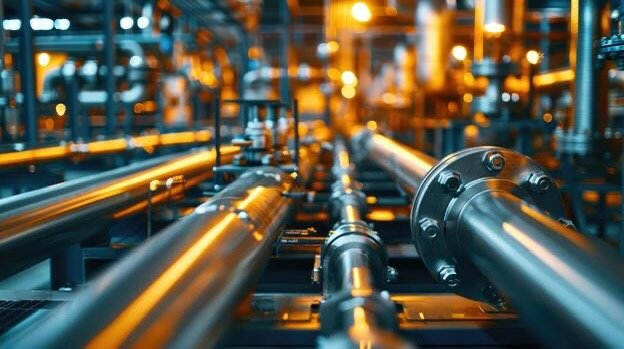
Pipe welding is more than just simple manufacturing. It demands a lot of control, positioning, and consistency. You shouldn’t try handling the large cylindrical PE and PPE pipes manually. It can be dangerous as well as inefficient. You can opt for a pipe welding rotator to help improve the workflow and the quality of the welds.
Regardless of the materials, the challenge of achieving stable rotation for consistent welds stays the same. With manual effort, you won’t be able to meet the required standards. Hence, it is important to consider a welding rotator to produce high-quality pipes. In short, a pipe welding rotator ensures that you struggle less but still achieve the perfect weld.
Storage Tanks and Pressure Vessels Industry
If you work in the storage tank and pressure vessels industry, you have to deal with heavy and complicated pieces. The quality of the welding in the sector is the difference between safety and danger. The structures in this sector are often cylindrical. To weld them precisely and continuously, a lot of time and effort is involved. Hence, welding rotators provide the best combination of precision and productivity in this sector. SENLISWELD’s rotators are commonly used in oil & gas, shipbuilding, and pressure vessel industries.
1. Oil & Gas Tanks

If you are working with oil and gas tanks, you must know that this sector primarily involves the continuous and precise welding of large cylinders. The welding is done at a constant rate with the help of a tank welding rotator. The smooth and controlled rotation allows you to maintain consistency and quality.
2. Heat Exchanger
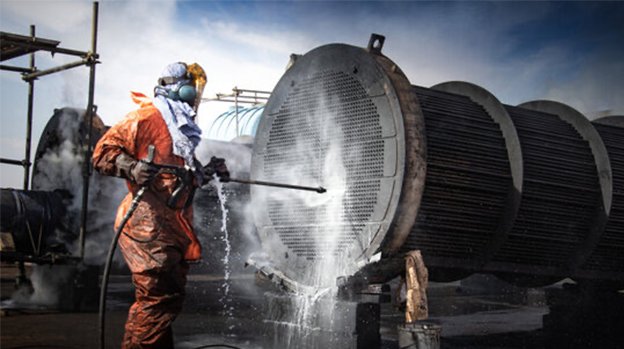
If you are working with heat exchangers, you should recognise that they also involve cylindrical components. These also demand their weld to be precise, clean, and uniform. With the help of a tank welding rotator, you can ensure steady rotation that will help you have better control over the process.
3. Pressure Vessels
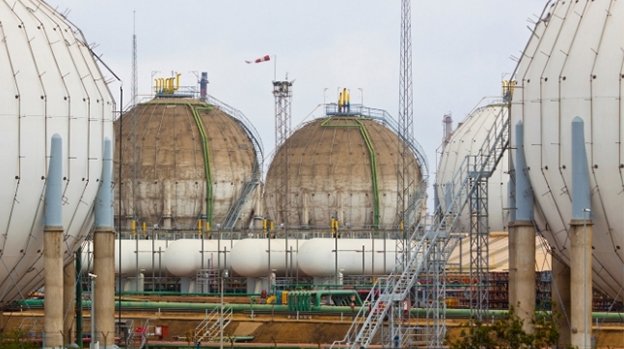
You must know that pressure vessels have to deal with critical conditions, which include extreme temperatures and pressures. Hence, they demand a greater degree of welding integrity, which comes from stability and uniformity during the process. This is where a rotator can benefit you. It helps you keep good control, allowing you to reduce the defects and rework. Hence, you can easily make strong and reliable welds.
Other Industries That “Just Need Rotation”
1. Wind Turbine Towers

Wind turbine towers often utilise large cylindrical pieces. If you are dealing with them, then you must prioritise precision in welding. For this, adjustable welding rotators are advantageous. They lift and rotate smoothly, which helps you handle each component with utmost safety. This gives you improved control and productivity in renewable energy projects.
2. Cylindrical Steel Structures
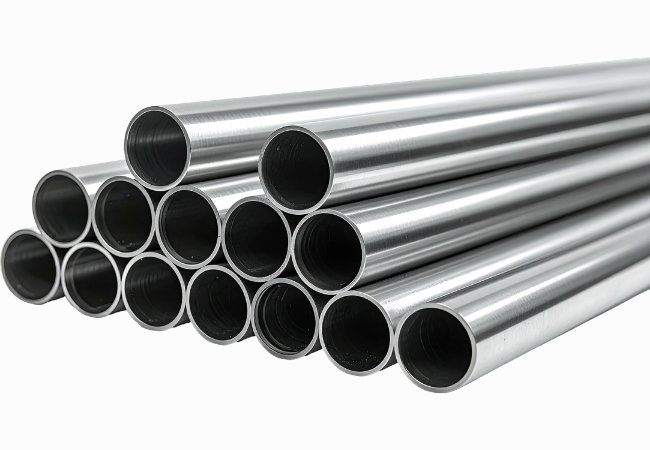
You can easily find many industrial projects using cylindrical steel pieces. Without proper lifting and rotation, it becomes difficult to weld such structures. You end up wasting a lot of time and effort. However, if you use adjustable welding rotators, you smooth the movement of structures. This helps ensure weld consistency, which not only improves weld quality but also reduces your efforts.
3. Shipbuilding Industry
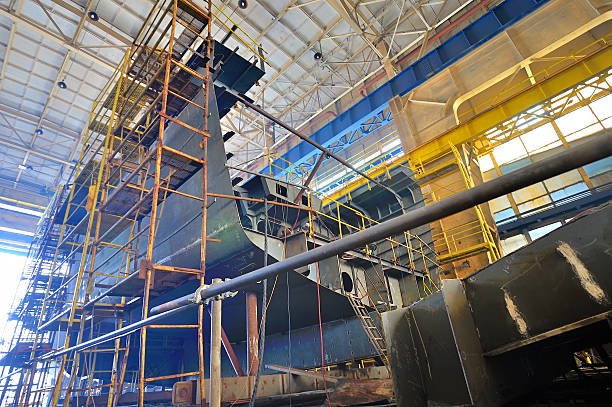
The shipbuilding industry involves working with highly complex cylindrical structures. These structures require strong welds as they have to withstand critical environments. You can spot the welding rotators handling these structures efficiently. These welding rotators ensure increased and improved workflow without compromising the structural integrity of the welds.
4. General Fabrication
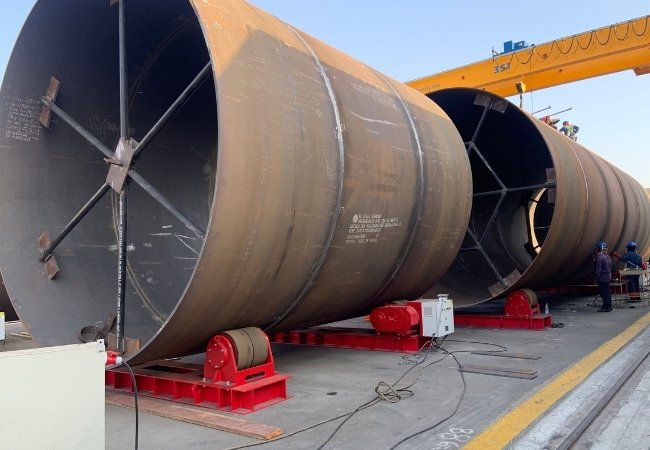
You can benefit from a welding rotator when working on any cylindrical workpiece that needs to be rotated during the welding process. It can be a small pipe or even a large tank. The welding rotator will work similarly to provide you with better control and efficiency. They are useful for controlling and operating pieces, no matter the size. Welding rotators help you improve the performance of different projects involving various workpieces that need rotation.
How to Choose the Right Welding Rotator
Efficiency, safety, and quality of work are all impacted by the welding rotator you choose. Each rotator has its own features and models. When selecting from the designs of each model, focus on features that meet the specifications of your work and workpieces. The correct selection avoids operational inconveniences and provides a stress-free and steady operation.
Load Capacity
You should choose a rotator that can carry the maximum weight of your workpieces without concern. Estimate the maximum dynamic load by considering the safety margin.
Workpiece Diameter Range
There are many different rotators designed to support certain diameter ranges. If you have to switch sizes, a self-aligning rotator may be best.
Roller Material
Consider the roller material as it affects grip and surface protection. Polyurethane is common when surface quality is important.
Speed Control
Variable speed control enables the rotation to be set according to your needs, adjusting for material thickness.
Control System
Modern welding rotators offer remote controls and foot pedals for increased convenience and efficient workflow.
Safety Features
Look for anti-drift rotators with overload protection and emergency stops to safeguard your tools and workers.
| Feature | Advantages |
|---|---|
| Load Capacity | Supports heavy workpieces safely and reliably |
| Diameter Range | Adapts to different sizes with little adjustment |
| Roller Material | Ensures a strong grip without surface damage |
| Speed Control | Improves weld consistency and precision |
| Control System | Makes the operation smoother and more convenient |
| Safety Features | Reduces risk with built-in protection systems |
Our welding rotators are commonly used in oil & gas, shipbuilding, and pressure vessel industries.
Why Choose Our Welding Rotator
Welding rotators are more than just supporting equipment. They affect the quality, speed, and consistency of the entire welding process. Selecting the right welding rotator directly impacts your welding efficiency, operational safety, and the ultimate quality of your weld seams. At SENLISWELD, we are dedicated to providing stable, precise, and reliable rotational solutions for a wide range of industrial applications.
From light-duty to heavy-duty applications, SENLISWELD welding rotators ensure stable and reliable equipment operation.
PU Rollers
Wheeled and Polyurethane (PU), SENLISWELD rollers provide great friction with a safe surface adherence to the PPE surface of the material.
Simple & Safe
Features include wireless remote control, foot pedal control, anti-creep systems, and overload protection to ensure safe and efficient operations.
Custom Solutions
We offer a wide variety of rotator types—including standard, self-aligning, screw-adjustable, and tilt/turn models—to meet specific requirements.
CE Certified & ISO
Every product is CE and subject to ISO quality control standards, ensuring that our high-quality products provide you with superior service.
This allows you to control the material while it is fully protected. If you select our welding rotator, you will be able to work with your equipment rather than fight with it. It will amaze you with faster, cleaner, and more reliable welds. You won’t have to worry about your productivity and performance. This is something your demanding industrial work is definitely in need of.
Conclusion
Welding rotators are a game-changer if you work with pipes, tanks, and cylindrical shapes. They help you eliminate challenges associated with manual flipping, improper positioning, and unstable conditions. They allow you to smoothly rotate, have better control, and ultimately enjoy a consistent finish. You not only enjoy increased productivity but also enhance your workplace safety standards. Not to forget, the noticeable decrease in labor effort.
Investing in quality rotating equipment is beneficial and a smart choice, no matter which industry you belong to. Pipe line, tank, and industrial work all benefit from quality rotating equipment. The difference becomes obvious once you start using a welding rotator. All it takes is the first use to appreciate the ease, speed, and efficiency that welding rotators provide.
Frequently Asked Questions
Q: What is the function of a welding rotator?
A: You can use a welding rotator when welding cylindrical workpieces like pipes and tanks. The rotator helps rotate these components easily without compromising on the stability and weld consistency. All the manual labor is also reduced.
Q: Are welding rotators suitable for PE pipes?
A: Yes, you can use welding rotators for tasks involving the welding of PE pipes. Polyurethane rollers work efficiently to provide a quality grip on the rotator. They can enhance the level of welding performance without surface damage to the material.
Q: What criteria do you use to select a welding rotator?
A: For good and efficient performance, you need to consider specifications such as speed control, the material of the roller, the weight capacity, and the range of diameters. These are also important to ensure a safe operating environment.
Q: What other industries use welding rotators?
A: Welding rotators can be used in industries such as construction, pipeline, oil and gas, shipbuilding, and wind energy. You can use them anywhere cylindrical workpieces are being installed.
Q: Are welding rotators a good investment?
A: Yes, spending money on a good welding robot set-up is a good investment as it improves the quality of welding, lowers labour costs, and increases the level of workflow efficiency. This is a huge improvement as it also saves time and effort.


 EN
 ES
 RU
 JA
 FR
 PT