

When welding thick steel plates, you don’t just connect two pieces of metal. For steel plate welding, you need the right steel plate welding method as well as a proper design for the joint. You also need filler metal, appropriate input of heat, and preheating. Only then can you achieve a strong and reliable weld.
Controlling heat becomes critical as the steel plates become thicker. If your welding practices aren’t good, you might end up with problems like racking, distortion, and lack of fusion.
When working with heavy machinery, bridges, pressure equipment, ships, or structural components, you need a process that suits your grade of steel plate as well as its thickness. Let us explain how thick steel plate welding works along with tips to help you select proper equipment for the task.
What Is Steel Plate Welding?
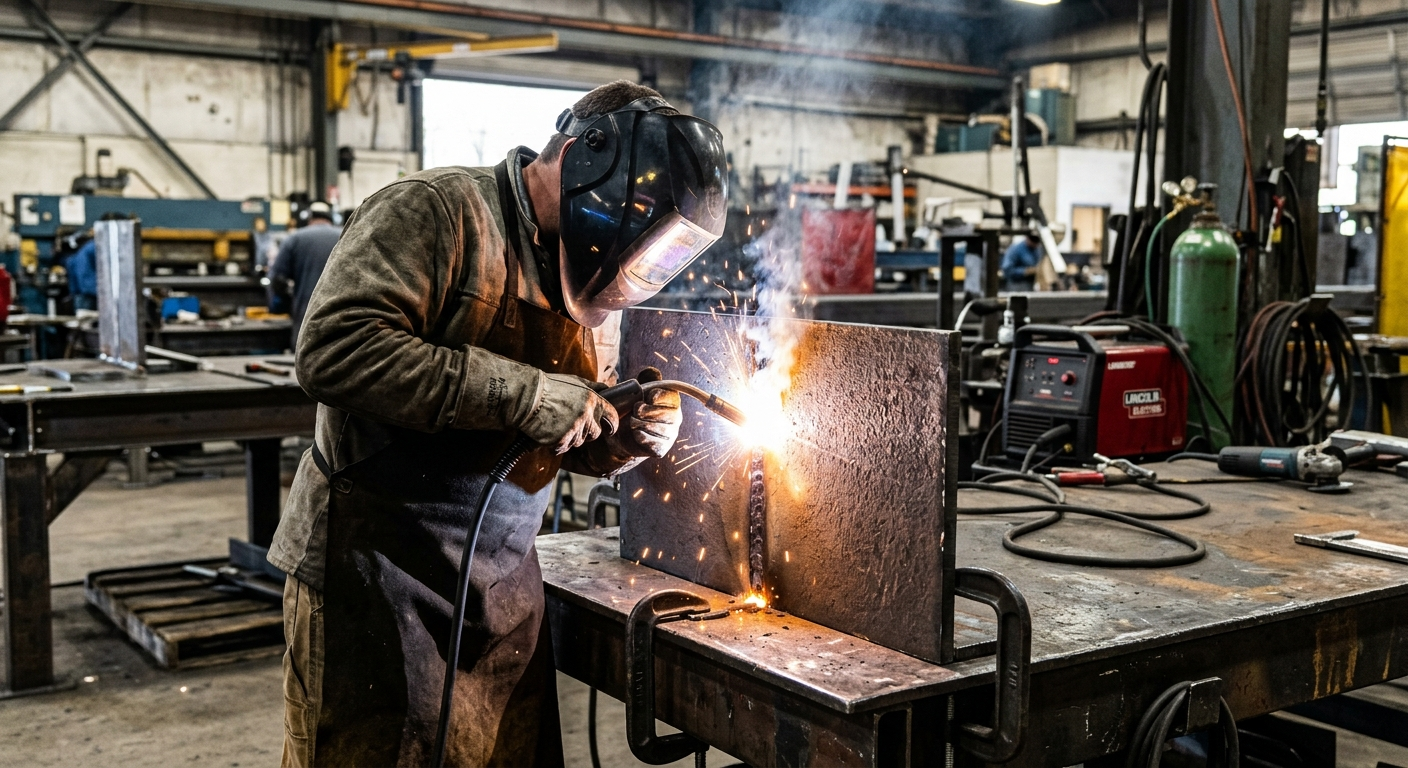
Steel plate welding fuses individual steel plates by joining them with heat, pressure, or at times both. In industrial production, fusion welding utilizes the melting of both the base metal and filler metal to forge a permanent joint after the weld pool cools and solidifies.
Hence, you can use any method from the following:
- Shielded Metal Arc Welding (SMAW)
- Gas Metal Arc Welding (GMAW)
- Flux-Cored Arc Welding (FCAW)
- Submerged Arc Welding (SAW)
- Gas Tungsten Arc Welding (GTAW)
When welding thick steel plates, you’ll likely need to utilize additional welding passes to deposit more weld metal compared to thin plates. Hence, you can’t use one continuous pass. While appearance is important, a good weld needs adequate penetration, fusion, strength, toughness, and dimensional accuracy.
Hence, the welding procedure you select must be in accordance with the steel’s chemistry. It should suit the plate’s thickness, joint type, amount of joint restraint, filler metal, and level of heat input.
Common Steel Plate Welding Methods
There isn’t a single method for welding all steel plates that can be labelled as best. The best method for you depends on several factors, including plate thickness and quality, desired joint configuration, position and accessibility of welds, needed volume of welds, available equipment, and any specifications or standards. Now, let’s look at some of the common methods used for welding steel plates.
1. Shielded Metal Arc Welding (SMAW)
Shielded metal arc welding is commonly referred to as stick welding. SMAW utilizes an electrode that is coated in flux. In order to weld, an arc must be struck between the base metal and electrode. Once the electrode and base metal are molten, the flux is used to shield the weld pool from contamination. SMAW is used for:
- Structural steel welding
- Field welding
- Welding repairs
- Welding construction
- Heavy equipment welding
- Welding off-site where portability is required.
A major strength of the process is the flexibility. You can take SMAW equipment to places where a larger, more automated system would be impractical. SMAW is also useful for a variety of welding positions. SMAW has a lower deposition rate compared to FCAW and SAW. For welding thicker sections, this can increase the number of passes required to complete the weld.
For hydrogen-related cracking used in many structural applications, low-hydrogen electrodes are used. For this, the American Welding Society recommends filler-metal diffusible hydrogen be taken into account when determining appropriate preheat requirements.
2. Gas Metal Arc Welding (GMAW)
Gas metal arc welding (GMAW), also known as MIG or MAG welding, relies on continuously fed wire electrodes and shielding gas. Conventional shielded metal arc welding (SMAW) requires the welder to stop repeatedly to replace the electrode.
The GMAW technique is an improvement in that aspect since a wire electrode is continuously fed. So, you don’t have to stop again and again to replace electrodes. GMAW is more utilized in industries since it makes welding a more efficient process.
GMAW is utilized in:
- Steel fabrication
- Assembly of machine components
- Assembly of structural components
- Manufacturing
- Automated and semi-automated welding
The process produces a high level of productivity and leaves relatively less slag when compared to other welding techniques. This helps you get cleaner welds. However, GMAW can be sensitive to environmental conditions due to the frequent need for shielding gas. This is a bigger concern when welding outdoors.
3. Flux-Cored Arc Welding (FCAW)
Flux-cored arc welding (FCAW) uses a continuously fed tubular wire with flux. The wire decides whether FCAW can be self-shielded or requires an external shielding gas. High deposition rates and good penetration make FCAW an excellent choice for heavy fabrication. It is used in the fabrication of:
- Large steel structures
- Heavy equipment for construction
- Shipbuilding
- Industrial equipment
- Large steel components
- Fabrication of thick plate
For large steel components, FCAW offers a good balance of productivity and versatility. However, you also have to choose an appropriate wire classification and shielding arrangement according to your application.
4. Submerged Arc Welding (SAW)
Submerged arc welding is well suited for welding large quantities of thick steel plates. In SAW, an arc works under a layer of granular flux. It acts as a shield, protecting the arc and the weld pool from the atmosphere. You can easily utilise SAW with automated and mechanized welding. It is often used with the following:
- Heavy structural works
- Pressure vessels
- Heavy beams
- Shipbuilding
- Wind tower components
- Long seams
- Thick steel sheets
SAW’s primary advantage is its productivity. Since SAW uses a high-current welding process and can be used with a continuous wire feed, a large amount of weld metal can be quickly deposited.
For thick sections, you can use modern techniques as well. These combine SAW with narrow-gap or hybrid laser-arc welding processes. They can help reduce weld volume and heat input when compared to conventional SAW.
5. Gas Tungsten Arc Welding (GTAW)
GTAW, known as TIG welding, uses a non-consumable tungsten electrode. It results in better quality welds with high amounts of control. However, you might feel that it is a relatively slow process when compared to high-deposition welding processes.
As a result, GTAW is often not the preferred choice for filling large volumes of thick steel plates. This process is more commonly utilized to place root gaps or when you need to ensure high weld quality and precise control. GTAW is most suitable when compared with other high deposition processes in terms of weld quality and control.
However, you must remember that a high deposition process does not automatically become the best choice when the joint is hard to access or needs to be welded in different positions. Here is an outline of common welding methods you can use.
| Method | Main advantage | Typical use with steel plate | Production speed |
|---|---|---|---|
| SMAW | Portable and versatile | Field work, repairs, structural steel | Low to medium |
| GMAW | Continuous wire feeding | Fabrication and manufacturing | Medium to high |
| FCAW | High deposition and versatility | Heavy fabrication and structural work | High |
| SAW | High deposition and automation | Long seams and thick plates | Very high |
| GTAW | Excellent control and precision | Root passes and specialized joints | Low |
How to Weld Thick Steel Plates
(Source:istockphoto.com)
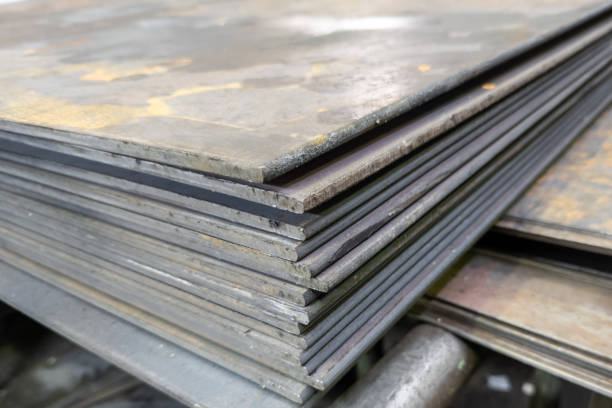
Welding thick steel plates requires better preparation in comparison to welding thin plates. Hence, you should be able to control the entire welding process, from the initial preparation to the final inspection. Let’s discuss how you can weld thick steel plates.
1. Identify the Steel Grade
Your first step should be to determine what type of material you are working with. You must review the material certificate or specifications for:
- Grade of the Steel
- Thickness
- Yield strength
- Tensile strength
- Chemical composition
- Applicable standard
- Type of heat treatment
This information will assist you in selecting the appropriate welding procedure and filler metal. Just because you are welding two pieces of carbon steel does not necessarily mean you can use the same welding parameters for each material.
Cracking sensitivity and thermal control of high-strength and alloyed steels are generally greater compared to lower-strength steels.
2. Check the Plate Thickness
The next step is to measure the actual thickness of the plate and calculate the total thickness at the weld. Thickness tends to determine the heat input, joint preparation, the number of weld passes, the need for preheating, and the time required for the welding.
Even when you plan to preheat thicker plates, you can see how guidelines vary based on steel composition, thickness of the plate, filler-metal diffusible hydrogen, and joint restraint. This is essential for thick steel plates as their thermal behavior is quite different from that of thin plates.
3. Prepare the Joint Properly
Joint preparations directly impact the quality of your weld. Beveling a simple square butt joint may not be sufficient in thicker plates. In such a case, a groove may be needed. Where joint preparations are concerned, some common ones include:
- V groove
- Double V groove
- U groove
- Double U groove
- J groove
- Double J groove
The purpose of a good joint design is to provide access to the welding arc while allowing only a specific amount of weld metal to be deposited. A poorly designed joint often forces the welder to deposit more weld metal than what is necessary.
This excess of weld metal increases the welding time, heat input, cost, and distortion. For plates that are too thick, a well-designed groove may greatly reduce welding metal volume. However, it only works if an appropriate process and procedure are planned.
4. Clean the Steel
Prior to welding, the joint area must be thoroughly cleaned. Cleaning should remove:
- Oil
- Grease
- Moisture
- Rust
- Paint
- Mill scale
- Dirt
- Other contaminants
By keeping your surface clean, you can ensure that there are no contaminants present. This helps in establishing a stable arc and minimizes the chance of weld contamination. Consumables must also be considered.
For low-hydrogen electrodes, you should also pay attention to moisture. Appropriate electrode storage and handling also minimize moisture content. This helps in retaining the desired properties of the electrode.
5. Fit and Tack the Plates
Before doing the main welds, you must position the plates in the right place. You need to look for:
- Root gap
- Alignment
- Joint angle
- Plate squareness
- Size of tack welds
- Spacing of tack welds
- Restraint
Tacking involves more than just joining two pieces together. You must be careful because misalignment can cause gaps, which can adversely impact penetration as well as weld geometry.
Poor penetration can lead to greater restraint, which can increase stress levels during welding. The welding procedure specifications give the joint and welding parameters for a particular joint. Hence, you must follow them instead of relying on estimations.
6. Preheat the Steel
Preheating is necessary when you are welding thick steel. Before you can begin welding, make sure you heat the base metal around the joint. You have to do this because preheating slows the cooling rate of the weld and the surrounding material.
This helps prevent hydrogen-assisted cracking and helps control the thermal conditions around the weld. The temperature at which you preheat the steel is determined by many variables:
- Steel grade
- Carbon equivalent
- Plate thickness
- Welding process
- Filler-metal hydrogen level
- Heat input
- Joint restraint
- Applicable welding code
Just because the steel plate looks thick doesn’t mean you can choose any preheating temperature. You have to look at the welding procedure specifications and the welding code.
Many guidelines outline the minimum preheat and interpass temperature requirements according to the steel grade and thickness. These guidelines also highlight alternate methods that can be used in appropriate circumstances for different steel grades.
7. Control Interpass Temperature
Controlling temperature during the welding process is more complicated than just preheating the welding area. The temperature of the weld prior to the deposition of the next weld pass is known as interpass temperature.
If you allow the metal to cool too much, the material may lose some or all of the benefit of the preheating. If you allow the metal to increase in temperature beyond the required range, it can completely disrupt the mechanical properties of the weld. For this reason, your welding procedure specifications must establish proper maximum and minimum interpass temperature limits.
8. Deposit the Root Pass
The root pass is arguably the most important part of the welding process. It forms the foundation of the remaining weld. Hence, you must ensure that it penetrates the base metal adequately, but doesn’t burn through. It must also be free from lack of fusion, slag inclusions, or any other defects.
Depending on the joint design and the welding process, you may choose a number of different processes including SMAW, GMAW, FCAW, GTAW, or any other qualified process for the root pass. The exact method of accomplishing the root pass should be in accordance with the welding procedure specifications.
9. Clean Between Passes
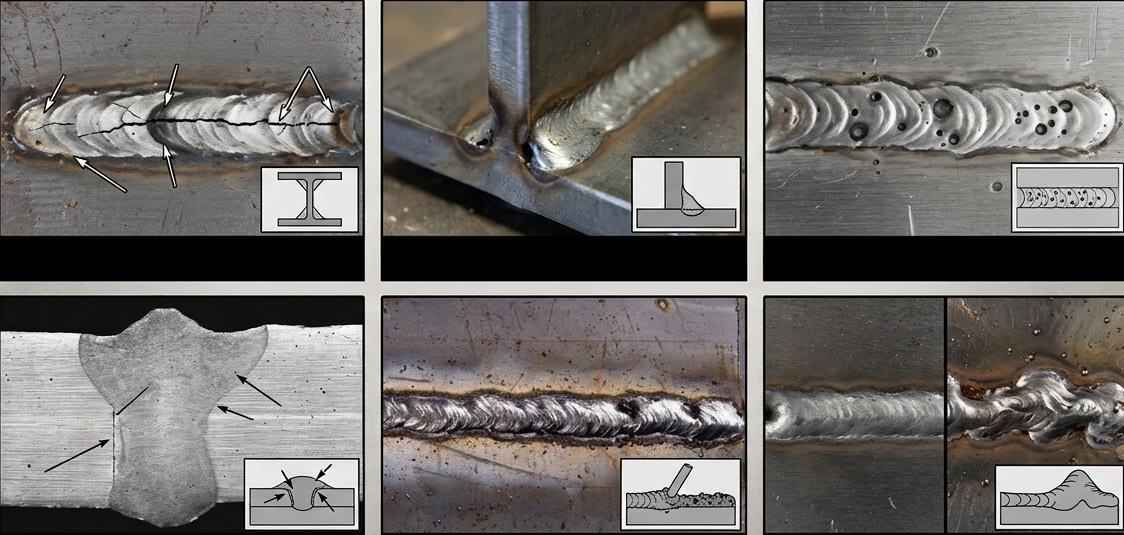
Before you put the next pass, make sure you have deposited the weld pass properly, removed slag, and inspected the weld thoroughly. This is especially essential for slag-producing processes. If slag gets trapped between passes, you can end up with inclusions. Between passes, you must look for obvious problems like:
- Cracks
- Undercut
- Porosity
- Lack of fusion
- Slag
- Poor bead profile
So, you must find the defect and continue to the next pass only after correcting the issue.
10. Use Multiple Passes
Thick sections require you to lay multiple passes. So, you don’t just fill the entire joint with one huge weld pass. You have to progressively build the weld using individual passes. Depending on the joint, weld sequences may include:
- Stringer beads
- Controlled weaving
- Alternating sequences
- Back-step sequences
- Balanced welding
- Skip welding
The weld sequence you use should be able to control heat distribution and distortion. The aim is to achieve the needed weld size and penetration without going beyond the qualified range of heat input.
11. Control Heat Input
Heat input is a very important factor in welding. It depends on welding current, voltage, speed, and your welding technique’s thermal efficiency. Using too little heat can lead to poor fusion or cooling that is not optimum.
Using too much heat can cause excessive distortion. This can also affect the microstructure and mechanical properties of the joint. Therefore, your goal shouldn’t be to maximize the available amperage, but rather to achieve a consistent, controlled level of heat input.
12. Manage Distortion
Thick steel does not eliminate the problem of distortion. During the welding process, steel is heated and cooled. It expands and contracts, creating stresses in the weld and surrounding metal. You can manage distortion by using:
- Proper joint design
- Appropriate welding sequence
- Well-balanced weld positioning
- Controlled heat input
- Using tack welds
- Proper fixturing
- Back-step or skip sequences where appropriate
- Symmetrical welding where possible
Your goal should be to control distortion during the fabrication process rather than trying to straighten the completed structure.
13. Allow Controlled Cooling
Once you are done with the welding process, you must allow the component to cool down according to the welding procedure specifications. Do not automatically quench a welded thick steel component unless your procedure specifies it.
Rapid, uncontrolled cooling can lead to harmful microstructures and cracking in susceptible steels. Hence, for critical applications, the required cooling, post-weld heat treatment, or hydrogen control procedure should be in correspondence with proper specifications.
When welding thick steel plates, you need more than just the right machine. You need repeatable parameters. Here are some parameters you need to consider when welding thick steel plates.
| Parameter | Why it matters | What you should control |
|---|---|---|
| Welding current | Controls arc energy and deposition | Amperage range |
| Arc voltage | Influences arc characteristics and bead shape | Voltage range |
| Travel speed | Affects heat input and bead size | Consistent travel rate |
| Wire/electrode size | Influences deposition and penetration | Correct consumable size |
| Polarity | Affects arc behavior and penetration | Correct polarity for process |
| Preheat | Controls cooling conditions | Minimum required temperature |
| Interpass temperature | Controls thermal cycling | Minimum/maximum limits |
| Joint design | Determines weld volume and access | Groove angle, root gap, root face |
| Welding position | Changes weld-pool behavior | Flat, horizontal, vertical, overhead |
| Shielding gas/flux | Protects the weld from contamination | Correct flow and specification |
| Welding sequence | Helps control distortion | Approved sequence |
| Heat input | Influences cooling and properties | Stay within qualified range |
Welding Equipment for Steel Plate Welding
Your equipment must match the plate, welding process, production volume, and environment. Here is the essential equipment you must have in order to weld steel plates smoothly.
● Welding Power Source
Your choice of power source depends on the welding process. Fabrication shops working on heavy-duty projects may need more powerful equipment for FCAW, GMAW, or SAW.
For field welding, SMAW may require an emphasis on ruggedness and portability. For automated welding, you may require a travel system that is properly mechanised or a welding carriage.
● Wire Feeders
When considering GMAW or FCAW, a wire feeder must ensure uniform wire delivery. A stable wire feed contributes to consistent arc characteristics as well as uniform deposition. For thick plate applications, you must choose a feeder and torch system that can accommodate wires of larger diameters and be able to withstand the duty cycle.
● SAW Equipment
SAW consists of a power source, wire feeder, welding head, flux delivery system, and travel mechanism. For long repetitive welds, where productivity is important and consistency is key, mechanized SAW may be your best choice. Control of wire feeding and travel speed may be easier to implement with mechanized SAW. This helps you enhance the consistency of welding.
● Preheating Equipment
You must ensure a consistent way to heat a plate when preheating is necessary. Under the given circumstances, this can include:
- Gas burners
- Heating resistance
- Induction heating
- Heating blankets
- Other controlled heating systems
The important thing is not to just heat steel. You also need to check whether the temperature specified is achieved and sustained.
● Temperature Measurement
You can use appropriate temperature measuring equipment to verify preheat and interpass temperatures. Depending on your process and specifications, these may include:
- Temperature crayons
- Contact thermometers
- Infrared thermometers
- Thermocouples
- Temperature measuring and controlling systems
For more critical fabrication, temperature measuring and controlling systems must be as per the applicable requirements and procedures.
● Welding Positioners
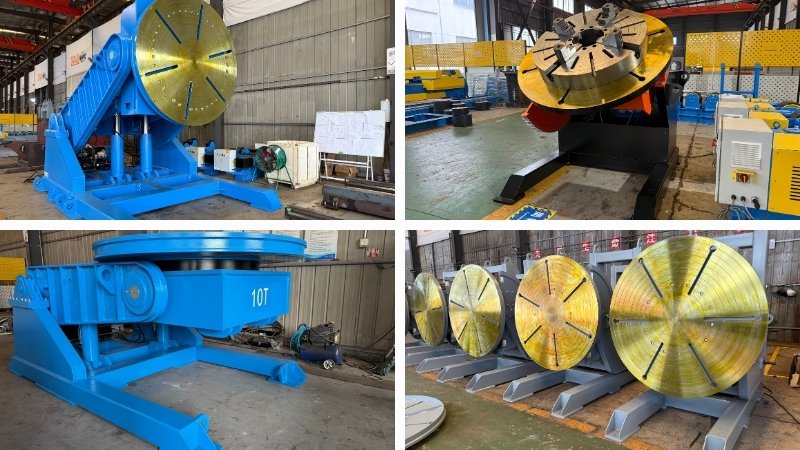
You can make your thick steel plate welding process easier with a welding positioner. It has the ability to rotate and position your workpiece so that you don’t have to move around it again and again to access the joint.
If you are able to keep your weld in a favourable working position, you can ensure increased productivity and consistency while lowering operator fatigue. Positioners are especially useful in repetitive industrial fabrication projects.
● Fume Extraction and Safety Equipment
Welding generates fumes, heat, ultraviolet radiation, sparks, and other hazards that are considered dangerous. Hence, you must install a good local exhaust ventilation system or ensure sufficient general ventilation in your welding area. You must also have:
- Welding helmet
- Protective clothing
- Welding gloves
- Safety shoes
- Eye protection
- Hearing protection if required
- Respiratory protection if required
- Fire prevention equipment
You must follow all the necessary safety requirements applicable to your workplace as well as your welding process.
Conclusion
When you are working on thick steel plates, getting a strong weld involves much more than just selecting the welding machine. You have to consider steel grade, joint design, the welding process, filler metal, heat input, and the extent of preheating that is needed.
Whether you use FCAW, SAW, GMAW, or SMAW, you must follow the correct welding procedure specifications and the welding standards that are applicable.
By controlling your welding sequence along with the interpass temperature, consumables, and the process of inspection, your defects and the associated rework will be greatly reduced. When you use the right approach, you can ensure a high level of strength, consistency, and reliability of welds even in challenging thick steel plate welding applications.
Frequently Asked Questions
Q1. Which method is considered best for welding thick steel plates?
A: There is not a single “best” welding method. However, SAW has the capability to mechanically weld longer, continuous welds. FCAW is a good choice for heavy-duty fabrication. SMAW is a field welding method. When choosing one, you need to consider your steel, joint design, and project requirements to make an appropriate decision.
Q2. Is preheating a requirement for welding thick steel plates?
A: Not necessarily. Preheating requirements vary with steel grade, thickness, chemistry, filler metal, heat input, and joint restraint. You should always follow the specifications and welding code rather than randomly estimating the required temperature.
Q3. Why do long welds on thick steel plates require many passes?
A: It may be necessary to use multiple passes to fill thick welds. These passes allow the welder to control the weld penetration, bead size and shape, heat input, and also help ensure a good quality weld.
Q4. What produces cracks when welding thick steel plates?
A: Cracking is caused by hydrogen, certain types of steel chemistry, rapid cooling, high restraint, inadequate preheating, and poor procedures. You can manage all of these elements by following recommended guidelines related to the storage of consumables, thermal control, and welding procedures.
Q5. What techniques can be used for thick steel plate welding to prevent distortion?
A: You can minimise distortion by ensuring proper joint preparation, accurate fit-up, appropriate selection of welding procedure, controlled heat input, balanced welding, and a well-planned sequence. Use of fixtures or positioners may also help with precise alignment.
Q6. What are the equipment requirements for welding thick steel plates?
A: Equipment you basically require includes an adequate welding power source, feed wire or electrode system, welding torch, preheating unit, thermocouple, fixtures, and fume extraction. The selection and setup of this equipment depend on your welding process and application.
Recommend Reading
Types of Arc Welding – SENLISWELD
Types of Welding Joints – SENLISWELD
Gmaw vs Fcaw – SENLISWELD
Stainless Steel Welding– SENLISWELD


 EN
 ES
 RU
 JA
 FR
 PT