

Did you face issues with speed and accuracy while manufacturing metal? Laser welding has altered how manufacturers tackle these problems. Traditional welding techniques cannot be compared to laser welding, which offers a concentrated laser beam to weld strong and clean joints with very little heat damage.
Whether you operate a manufacturing business or own a fabrication shop, learning the basics of laser welding will help you appreciate the sudden spike in its popularity. From automotive and aerospace to medical and electronic technologies, laser welding is being utilised everywhere. Let us explain how laser welding works, its types, advantages, typical defects, and common applications.
What Is Laser Welding?
Laser welding is a fusion process that uses a high-powered laser beam to heat and bond metal at the joint. As the beam strikes, it melts the metal. When the metal cools, the materials get bonded together.
The best analogy to understand this process is the magnifying glass being used to focus sunlight at a small point. It concentrates heat, which makes the paper burn. Instead of a focused light beam, an industrial laser is used to melt metal more powerfully and precisely.
You can use laser welding on a plethora of metals, including some dissimilar metals. This process can be used on stainless steel, carbon steel, titanium, aluminum, nickel alloys, and many other metals.
When you focus the heat on a small area only, it leads to less distortion on the metal compared to other welding methods. This provides an aesthetically pleasing metal weld and eliminates the need for lengthy metal cleanup.
Types of Laser Welding
There are various techniques for laser welding suitable for different materials, thickness, welding speed, and weld quality requirements.
By knowing the common types, you can select the most appropriate one to accommodate your distinct parameters.
1. Heat Conduction Welding
Heat conduction welding uses a laser of lower power. You only need the top layer of a material to be melted. It doesn’t require penetration throughout the material.
Heat conduction welding helps you produce smooth, attractive welds that require very few touch-ups. For stainless steel kitchen appliances, manufacturers favor heat conduction welding because the appliances need to look good and be strong.
Common applications include:
- Thin sheet metals
- Decorative items
- Electronic parts
- Medical devices
Advantages include:
- Welds look smooth
- Low distortion
- The surface finish is good.
- Process is easier to control
2. Keyhole Laser Welding
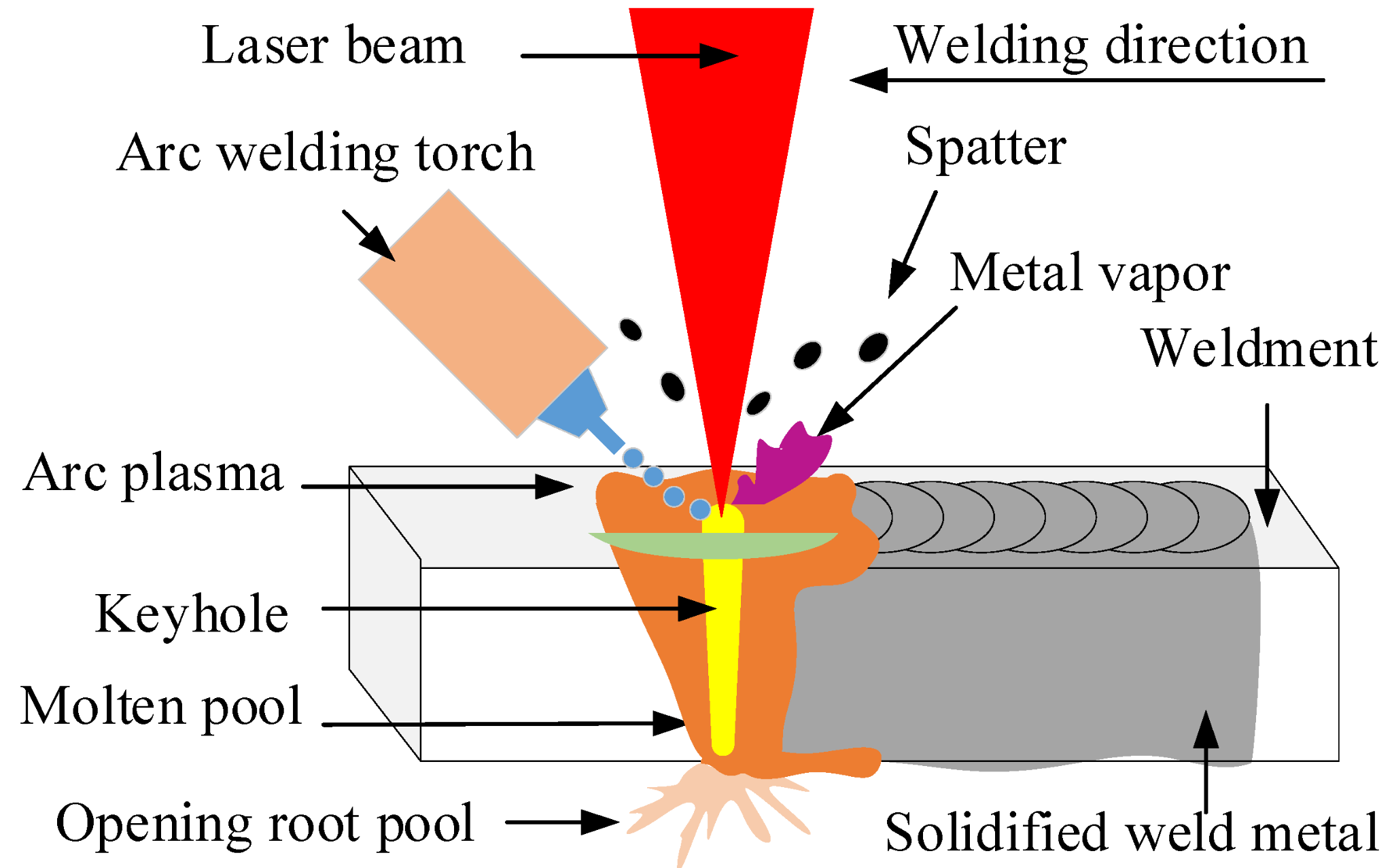
Keyhole welding requires much more laser power compared to other welding methods. A small quantity of the metal is completely vaporized by the laser beam. Only then can you form a narrow cavity called a keyhole.
As the laser travels, the vaporization continues along the seam. The surrounding molten metal solidifies around the keyhole and forms a deep, narrow weld.
Keyhole welding is ideal for:
- Welding thick metal sections
- Welding structural components
- Welding automotive chassis
- Heavy industrial fabrication
Welds formed by this method are far stronger than those that are not formed by deep penetration.
3. Pulsed Laser Welding
Pulsed laser welding uses an intermittent laser energy rather than a continuous laser beam. Each individual pulse of the laser beam melts a small section, which is allowed to cool.
Pulsed laser welding is ideal for:
- Thin components
- Precision parts
- Small electronic components
- Jewelry repair
An advantage of this method is that there is minimal heat input to the components being welded. Hence, wrapping and burning of sensitive components due to heat is unlikely.
4. Continuous Wave Laser Welding
This method requires the laser beam to be active and uninterrupted during the entire welding operation.
The advantages of this method are:
- High welding speeds
- Weld seams are continuous.
- Greater efficiency and productivity
- Better quality welds on thick sections
Continuous wave systems are a popular choice for large manufacturing plants. The method supports your automated production lines that are operational 24 hours a day.
5. Fiber Laser Welding
Fiber laser welding has been the preferred technology in the industry for the last ten years. Systems based on older gas lasers require more downtime.
However, fiber lasers generate the beam through optical fibers, which eliminates energy inefficiencies and improves beam quality.
Advantages include:
- Cheaper operations
- Greater control
- Longer lifespans
- Faster welding
- Less maintenance
Nowadays, you can see how fiber lasers are being utilized in automotive factories because the method uses less energy to run and can help grow operations.
6. CO₂ Laser Welding
Developed in earlier systems of gas lasers, CO₂ lasers remain one of the first effective systems of industrial laser welding. You can still make use of it when welding non-metal materials and some specific metal types.
They are more reliable than many of the systems presently used, but they do require more maintenance and consume more energy than modern fiber laser systems.
Currently, many industries use fiber lasers in new installations, while existing CO₂ systems are still being used in the older systems.
What Is the Laser Welding Process?
You might think laser welding is a complicated process, but it’s just a simple sequence of carefully controlled steps. By having a good understanding of these steps, you can acknowledge why laser welding is trusted across various precision-focused industries.
1Step 1: Preparing the Workpiece
A laser weld cannot be carried out without adequately prepared surfaces. Before you fire even a single beam, you must ensure that the surfaces are cleaned and aligned properly.
Contaminants such as oil, grease, rust, paint, dust, or even oxidation can interfere with the laser beam, causing cracks or pores in the joint.
The cleaning process depends on your material. You can clean your workpiece surfaces by chemical cleaning methods, solvents, grinding, and even wire brushing.
Alignment of the workpieces is as important as the cleaning process. For optimal results, laser welds work best on surfaces that have minimal to no spacing between components. The presence of gaps will negatively impact the strength of the weld and result in an incomplete fusion.
An example of this is when laser welding is employed to join two sheets of stainless steel in the manufacturing of food processing equipment. The exact location of both sheets must be ensured throughout the welding process. A small alignment error could affect the final assembly.
2Step 2: Focusing the Laser Beam
After preparation, the beam is pointed at the joint. With the help of special optical lenses, the beam is concentrated to a very small diameter. The energy is sufficiently concentrated to make the temperature spike in the spot within milliseconds.
The spot size may be influenced by:
- The type of metal
- The thickness of the metal
- The depth of the beam’s penetration
- The width of the weld
If the spot is smaller, it helps produce a much greater energy density. Hence, you can penetrate the laser to a greater depth into the material.
Laser welding technology can also use computer-controlled optics that provide a consistent focal spot throughout the length of the weld.
3Step 3: Melting and Joining the Metal
Once the beam of the laser strikes the metal, the temperature quickly rises beyond the metal’s melting point. The molten metal forms a weld pool along the path of the laser beam.
The laser keeps moving along the joint, and fresh metal keeps melting. The previous section starts to cool and solidify. So, you can get one continuous weld bead that joins two components together permanently.
Some manufacturers choose to use filler wire; however, it depends on the application. The majority of today’s laser welds do not utilize filler material because the base metal tends to provide enough molten material.
4Step 4: Shielding the Weld
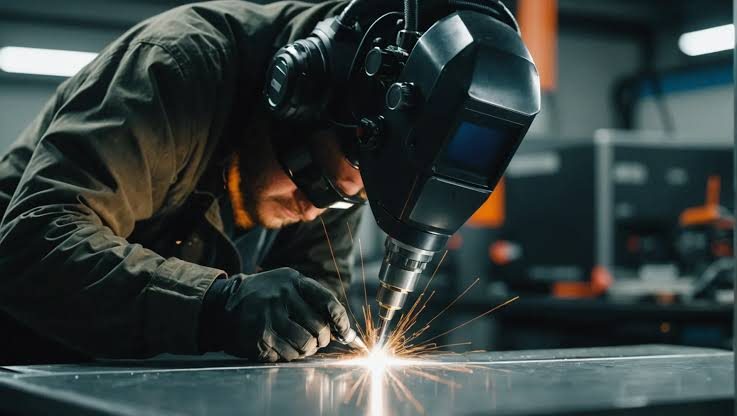
A laser does perform the welding task, but shielding gas helps prevent contamination of the molten metal.
If there is no shielding gas, the metal will react with air to form oxides, which will result in a bad-quality weld. The gas you choose for shielding depends on your metal type and your desired weld quality.
Your choice of shielding gases can be:
| Shielding Gas | Typical Use |
|---|---|
| Argon | General-purpose welding |
| Helium | Deep penetration welding |
| Nitrogen | Stainless steel applications |
5Step 5: Cooling and Solidification
When the laser moves forward, the molten metal starts to solidify quickly. The rapid cooling is one of the benefits of laser welding. It creates only a small area of a heat-affected zone.
If you have a small heat-affected zone, this means the surrounding material experiences less thermal stress and mechanical deformation. By this, you can preserve your metal’s original mechanical characteristics and also minimise the risk of distortion.
You can take the example of repairing a stainless steel enclosure. Traditional welding can cause a large area of the sheet to warp. However, if you do laser welding, you can localise the heat, which allows the sheet to remain flat.
6Step 6: Inspection and Quality Control
Joining together isn’t the only goal of a welder. You should inspect each weld to make sure it meets the quality standards. You can inspect a weld by the following methods:
- Visual inspection
- Dye penetrant testing
- Ultrasonic testing
- X-ray inspection
- A sample weld can also be subjected to destructive testing.
With highly automated production lines, welds are often checked with cameras and sensors that monitor weld quality in real time. Hence, problems with welds can be identified immediately rather than after production is completed.
How Does the Laser Welding Process Work?
The laser welding process combines advanced optics, carefully managed heat, and precise motion control to give you a production of clean and durable welds. Although the equipment is complex, the basic working principle is easy to understand. Let’s break down how the process works.
Laser Beam Generation
The first step takes place in the laser source. Energy in the form of electricity is turned into energy in the form of light. This produces an intense laser beam.
The fiber laser is an excellent modern industrial system choice because of its efficiency, excellent beam quality, and low maintenance. The beam that is formed has a lot of energy concentrated into a very small diameter.
Beam Delivery System
After you have generated the beam, it travels through optical fibres and mirrors all the way to the welding head. The focusing lenses in the welding head decrease the beam to a small diameter to allow accurate targeting.
By having the ability to control the position of the beam, you can create complex welds of consistent quality. In an industrial setting, you can ensure repeatable quality during high-volume production. This is only possible because the robotic welding systems can accurately position the laser within a fraction of a millimeter.
Material Interaction
When the beam focuses on the metal surface, the energy gets absorbed almost immediately. This causes a thermal energy buildup so great that it causes the metal at that point to melt.
At higher powers, the metal begins to boil away, leaving a cavity in the shape of a keyhole. Subsequently, it allows the laser to dive deeper into the workpiece, resulting in the formation of welds that are narrow but strong.
At lower powers, the metal is melted with no keyhole formation. The ability to adjust power levels gives you the flexibility to choose the most appropriate process for your applications.
Weld Pool Formation
As your laser travels, it leaves behind a pool of molten weld beneath it. The final shape of this molten metal pool is determined by gravitational and surface tension effects.
Laser systems maintain pool stability and help avoid defects created by too much penetration or incomplete fusion by balancing power, speed, and focus. These parameters are set based on the design and thickness of the metal by welding engineers.
Computer-Controlled Precision
Nowadays, the high level of automation has become one of the major reasons why laser welding is used widely.
Computer-controlled systems automate:
- Laser welding power
- Travel speed
- Focus of the beam
- Tracking of the joint
- Movement of the robot
These systems help you minimise human errors, enhancing the consistency of the welds. For instance, automotive factories making thousands of the same car doors every day have to eliminate the need for manual adjustments. Automated laser welding allows you to ensure uniform quality is maintained across all the welds.
Factors That Affect Weld Quality
There are many variables of laser welding that can affect the weld quality:
| Factor | Effect on Welding |
|---|---|
| Laser Power | Controls penetration depth |
| Welding Speed | Affects bead shape and fusion |
| Focus Position | Determines energy concentration |
| Material Thickness | Influences power requirements |
| Shielding Gas | Prevents oxidation |
| Joint Fit-up | Improves weld consistency |
Advantages of Laser Welding
Laser welding has become a favored method of manufacturing. You might think laser welding equipment is a big initial investment. However, you can easily recover the cost. Below are some advantages of laser welding that make it better than traditional welding.
1. High Precision
Laser welding allows high precision because the method focuses heat into a small and targeted area. This ensures that the welds are neat and accurate with tight tolerances. This method is perfect for small, precise, and fragile components, as well as assemblies and products that require great surface finishes.
2. Faster Production Speed
Compared to conventional methods of welding, laser welding is much more efficient. The high travel speed of laser welding allows you to manufacture a greater number of products within a specific time period. As a result, the cost of manufacturing decreases. Your mass production can really benefit from the thousands of hours you save each year.
3. Minimal Heat Distortion
The laser welding focuses the heat into a specific area, keeping the surrounding metal cool. This method of welding reduces warping, shrinkage, residual stress, and straightening that must be performed after welding. You might have seen thin metal sheets bend after welding. Hence, laser welding is a perfect method for manufacturing thin metal sheets.
4. Deep, Strong Welds
Laser welding is able to produce penetrative, strong welds just with a narrow beam. With keyhole laser welding, you can get deep welds that offer excellent strength. This is especially important for structural components that have to bear heavy loads.
5. Cleaner Weld Appearance
Compared to conventional welding, laser welding produces a weld that typically needs little to no finishing.
Laser welding beads are:
- Smooth
- Less spattered
- Less discolored
- Require minimal grinding
This helps you save time and money that would otherwise be spent on finishing and labor.
6. Easy Automation
Laser welding is easily automated and integrates readily with robots and CNC.
The benefits of automated production include:
- Consistent quality
- Lower labor costs
- Higher production rates
- Greater safety for workers
Due to these benefits, many modern manufacturing plants are running laser welding cells around the clock with only a few operators.
7. Versatile Material Compatibility
You can use laser welding for a variety of materials, such as:
Carbon steel
AluminumTitanium
Nickel alloys
Copper
Laser welding is also especially useful for thin metals that are difficult to weld using other conventional welding systems.
Laser Welding vs. Traditional Arc Welding
| Feature | Laser Welding | Traditional Arc Welding |
|---|---|---|
| Precision | Excellent | Moderate |
| Welding speed | Very high | Moderate |
| Heat input | Low | Higher |
| Distortion | Minimal | Greater |
| Automation | Excellent | Good |
| Surface finish | Cleaner | Often requires finishing |
| Initial equipment cost | Higher | Lower |
Common Laser Welding Defects and Solutions
Laser welding is highly accurate; however, you can still end up with issues if your equipment and materials aren’t right. Below are some common defects you can overcome by adhering to proper welding practices and maintaining consistent process parameters.
1. Porosity
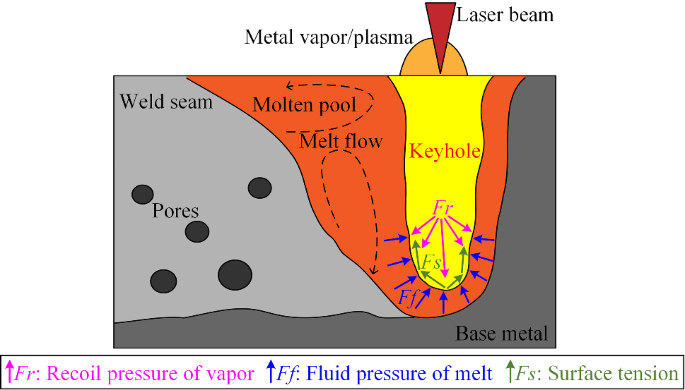
Porosity is one of the most frequent problems that occur during laser welding. It is characterized by the formation of small gas pockets in the weld pool before the material has the chance to fully solidify. Small voids cause a significant drop in a weld’s strength. It can no longer handle heavy loads or pressure.
Porosity is commonly seen in welds of the following:
- Welds on oily or contaminated surfaces
- Welds with an insufficient inert gas shield
- Welds carried out with non-optimal parameters.
- Welds on materials that are too moist
You can sort this issue by cleaning the workpieces thoroughly. You must ensure an appropriate shielding gas is employed along with the right gas flow. You can optimise welding speed and laser power. Storing materials in a dry environment is also important.
2. Cracking
Cracks are one of the most serious welding problems that lead to a complete failure of the weld. They can occur when the weld is cooling or as soon as the welded piece starts its service.
Defects can be attributed to the following factors:
- Rapid cooling.
- Excessive residual stress.
- Poor design of joints.
- Wrong fusion materials.
To sort the issue, you must maintain appropriate joint preparation and select the right welding parameters. You must lower the heat concentration and select only the materials that are compatible.
Always remember, high-carbon steels are more likely to form defects and fail than stainless steel. This is because metals with lower carbon levels harden rapidly during cooling.
3. Lack of Fusion
Poor fusion of welded joints occurs when the weld metal does not sufficiently bond with the base material. The welded joint may appear visually acceptable, but it might contain hidden weak zones inside.
Defects can occur due to:
- Low laser power.
- Excessive speed of travel.
- Poor joint fitting.
- Inadequate positioning of the laser beam.
You can overcome this problem by increasing the power of the laser and reducing the travel speed. Aligning the joint and maintaining the beam on the joint is also important. Well-calibrated machines reduce the likelihood of incomplete joint fusion.
4. Incomplete Penetration
Incomplete penetration refers to welding that is not fully complete across the thickness of the joint. This defect can present a serious problem when applying loads to structural components. As the joint is not fully welded, it will not be able to carry the loads.
Some of the most common causes of the defect include:
- Joint design inadequacy
- Poor laser energy
- Less than optimal focal position
- Excess material thickness
To correct or prevent incomplete penetration, you can adjust the laser power to increase penetration. Adjusting the focus of the laser beam and modifying the geometry of the joint are also good options. For welding thicker materials, consider using keyhole welding. For heavy equipment or automotive frames, full penetration is an absolute requirement to ensure long-term durability.
5. Undercut
Undercut describes a condition where a groove or depression is present along the edge of the weld bead. By removing the material from the base metal, it diminishes the strength of the joint.
Some common causes of undercut include:
- Excessive laser power
- High welding speed
- Poor focus of the laser
The best way to sort an undercut is to reduce the weld speed and laser power. You should also ensure proper laser beam alignment. By carefully controlling the parameters, you can prevent undercut from occurring.
6. Excessive Spatter
Spatter can still occur with laser welding due to poor operating conditions. However, the amount that is produced is much less when compared with other welding methods. You must avoid spatter as it creates rough welds and also increases the amount of time required for cleaning up.
The following can cause spatter:
- An unstable weld pool
- Excess power from the laser
- Inadequate shielding gas
To reduce the occurrence of spatter, you can adjust the laser settings, improve the shielding gas, and maintain a stable welding speed.
7. Distortion
Compared to other welding methods, laser welding produces a lot less distortion. However, distortion can occur with thin materials if excessive heat is allowed to build up.
The following can cause distortion:
- An Inadequate welding sequence
- An excessive amount of heat
- Poor fixturing
To reduce distortion, you can use clamps and fixtures. You must also adjust the welding speed and control the amount of heat being applied. Always perform the welding sequence in the proper order.
Summary of Defects, Causes, and Prevention
| Defect | Main Cause | Prevention |
|---|---|---|
| Porosity | Contamination | Clean surfaces and proper shielding gas |
| Cracking | Thermal stress | Correct parameters and suitable materials |
| Lack of Fusion | Low heat input | Increase power and improve alignment |
| Incomplete Penetration | Insufficient energy | Optimize focus and laser power |
| Undercut | Excessive speed | Reduce speed and adjust settings |
| Spatter | Unstable weld pool | Fine-tune welding parameters |
| Distortion | Excessive heat | Control heat input and use fixtures |
Conclusion
Laser welding is now one of the most reliable and efficient welding methods. The focused laser beam helps you create precise, strong, and easy-to-replicate welds with minimal heat distortion. The technology provides you with amazing speed and quality. Hence, it is highly useful in the automotive industry, medical industry, aerospace industry, and electronics industry.
However, like all other methods of welding, proper preparations have to be done, the machinery has to be set up, and inspections need to be carried out. By having a good understanding of laser welding, you can choose the best laser welding solution for your projects.
Recommend Reading
Welding Defects – SENLISWELD
Welding Process – SENLISWELD
Welding Joints – SENLISWELD
Frequently Asked Questions
1. What material can be joined by laser welding?
A: Laser welding can be done on many metals, including aluminum, copper, titanium, nickel alloys, carbon steels, and stainless steels. Material compatibility is determined by the laser type, material thickness, and welding parameters.
2. Is laser welding better than traditional welding?
A: Laser welding does have the potential to create superior welds than those formed by traditional welding. The combination of a less destructive heat profile, a deeper weld, and a more precise laser creates an excellent weld strength.
3. Which sectors use laser welding the most?
A: Sectors that require high precision manufacturing like; medical devices, jewelry, electronics, automotive, and aerospace, all utilize laser welding. It provides them with speed, precision, and flexibility to automate their high-volume production.
4. What are the greatest benefits of laser welding?
A: Laser welding systems offer more precise, deeper, and cleaner welds at a faster rate. With minimal distortion, it offers lower post-processing requirements. It can also be easily integrated with robotic manufacturing, creating a smoother process.
5. What are the causes of laser welding defects?
A: Laser welding can have negative results due to improper material choice, surface contamination, poor joint preparation, incorrect shielding gas, and wrong machine settings. Most issues can be improved with careful setup and proper maintenance.


 EN
 ES
 RU
 JA
 FR
 PT