

Metal Welding: Types, Techniques, & Complete Guide
If you think metal welding is all about melting pieces of metal and putting them together, then you are wrong. Metal welding utilises heat, pressure, or both to form a single, solid metal structure. If you properly weld metal, you can create a joint that is as strong as the base metal.
Welding is a common method used across various industries like construction, automotive, shipbuilding, and manufacturing. You can easily spot welded metal in everyday items as well. These include cars, bridges, pipelines, planes, and even utensils. However, metal welding demands expertise as not all metals are the same.
For instance, when you weld aluminium, it melts quickly. Similarly, cast iron has a brittle nature, which demands caution when heating and cooling. You would know that stainless steel is resistant to corrosion. However, it can easily wrap when overheated.
So, let’s discuss the unique properties of each metal along with their advantages and disadvantages. It will make the selection of the proper process, filler, and shielding gas easier for you. A good understanding of how metals behave will help you achieve strong, clean, durable and reliable welds.
What is Metal Welding?
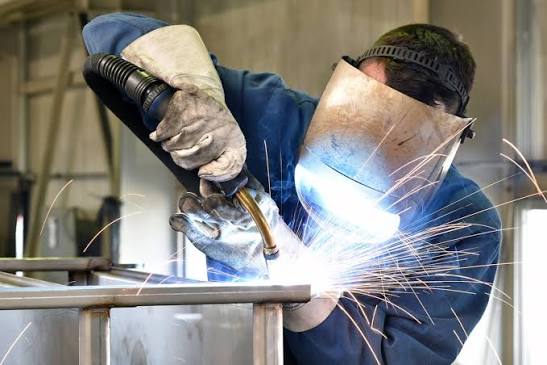
Welder Using A Welding Torch To Weld Metal
The process of metal welding utilises heat, pressure, or both to join pieces of metal together. This forms a permanent bond. If you weld the joint correctly, you can easily achieve a joint similar in strength to the base metal. The construction, manufacturing, automotive repair, shipbuilding, and medical tool industries utilise welded metal for various tasks.
You can easily spot metal welding being used in everyday structures, such as cars, buildings, and bridges. Metal welding is even utilised for pipelines, planes and kitchen utensils. Hence, welding metal may seem like an ordinary process of joining metal pieces, but it has numerous applications.
However, not all metal welding is similar. Different types of metal react differently when heated. If you heat aluminium, it will quickly melt. Hence, aluminium will demand proper cleaning to ensure strong joints. Similarly, if you use cast iron for metal welding, you will have to deal with its brittleness.
Uncontrolled hot and cold temperatures can make it crack easily. Then you have stainless steel, which can lose its corrosion resistance if overheated.
When you weld, you just don’t use the torch. You are also adjusting heat input, filler materials and shielding gas. To ensure proper welding, you must be aware of the behaviour of different metals at each welding step.
This decision determines the strength and durability of your weld. Always remember that each metal has its own unique strengths and challenges. If you have a good command of selecting the right metal welding type, you can make the best choice for your project. This will help you avoid common blunders that often lead to weak or cracked joints.
Why Welding Material Matters
Welders often focus on selecting the most suitable technique for their project. However, before you start welding, it is essential to understand the welding material first. Every metal you choose for your project will have unique properties.
The melting point, hardness, and even reaction to heat will be different. If you don’t know about the metal’s properties, you can’t select the right filler or even the welding process. Choosing the wrong one can render even the strongest metal brittle and prone to cracking.
For instance, you are a beginner looking for a metal that can handle high heat. Carbon steel is ideal for you. However, it is both hard and brittle due to its high carbon content. If you are unaware of this property, you might skip pre-heating it, which can lead to cracks.
Similarly, if you want a metal that can be easily wrapped. However, you want it to tolerate heat and retain its corrosion resistance. You should choose stainless steel. Stainless steel requires an appropriate shielding gas as well as a filler rod.
Hence, if you are unaware of the metal properties, you won’t know which one suits your needs and requirements the best. Furthermore, you can also end up skipping some necessary welding steps. Lightweight metals suffer the most because of this.
Aluminium’s oxide layer needs to be removed before welding, and magnesium demands a special welding gas. If you are unfamiliar with your material, you may skip these essential steps. Furthermore, you won’t be able to select the best filler material for your metal as well. This choice affects the strength and durability of the weld.
Shielding gas can go wrong, too. The gas ensures that the molten weld is protected against contamination. But which one will you use? Argon or helium? It all depends on the material of your metal. If you choose the wrong shielding gas, your weld will quickly become porous and weak.
Always remember that the welding process must be tailored to your metal’s material and the project’s requirements. The entire welding process must be prepared according to the properties of your base metal.
Being well-versed in the materials makes the welding process swift and efficient. It also saves you from costly repairs. By having adequate knowledge about metal materials, you can easily achieve strong, long-lasting welds.
Types of Metals for Welding
Whether you are a beginner learning how to weld metal or an expert choosing advanced metal welding techniques, understanding the materials is key.
Below are some common metal welding materials:
- Carbon steel
- Stainless steel
- Cast iron
- Aluminum
- Copper
- Special metals (nickel, titanium, magnesium)
Carbon Steel Welding
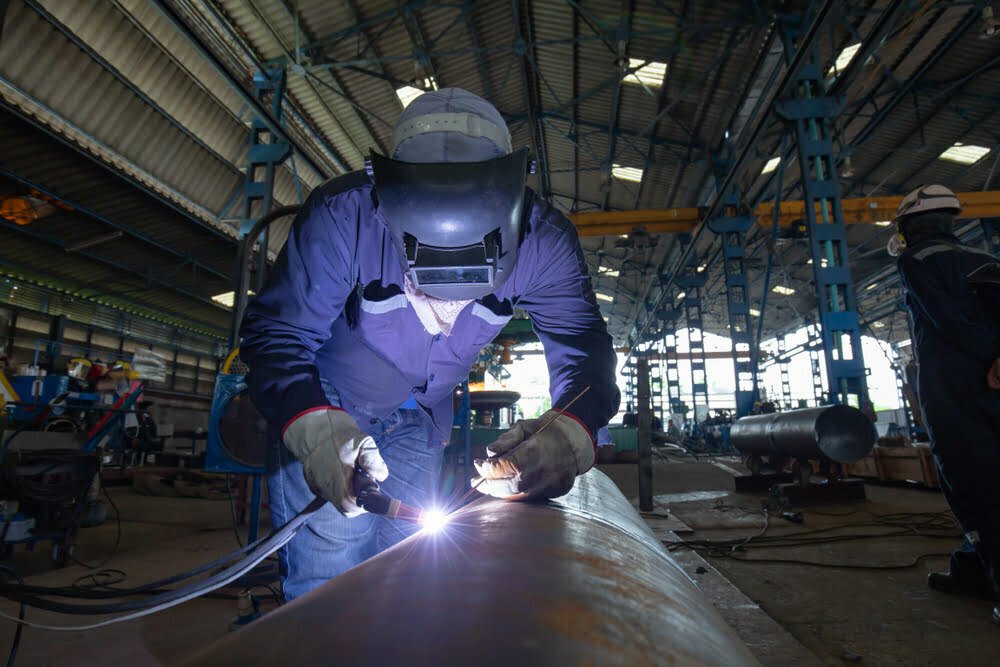
Welder Doing Carbon Steel Welding
So which metal is the most widely used around the world? It is carbon steel. Carbon steel welding is one of the most common choices in metal welding projects. Welders often choose carbon steel owing to its strength and affordability. It is also readily available in various thicknesses and grades.
You can surely spot carbon steel being used in skyscrapers, pipelines, machinery, and various manufacturing applications.
Advantages of Carbon Steel
Welders can select carbon steel for various applications. It’s not only versatile but also very compatible with stick, MIG, and TIG welding.
Furthermore, it is an excellent choice for beginners who want to use a metal that can tolerate heat. It will teach you how to control heat, select filler and prep the joint. If you choose low-carbon steel, you don’t even have to do a lot of preparation before welding. It is also great at resisting cracks.
Disadvantages of Carbon Steel
Welding medium carbon steel and high carbon steel is a difficult task. The high carbon content makes the metal hard. It needs careful handling as its brittle nature makes it susceptible to cracking. Hence, you must carefully preheat before welding and allow it to cool slowly afterwards.
Another drawback is the environmental considerations when welding with carbon steel. When exposed to moisture, carbon steel can quickly rust. To overcome this issue, you can add a layer of protective coatings or paints. This will help extend the life of the weld.
Common applications of carbon steel welding
Carbon steel is an excellent material for constructing the structural frameworks of buildings and bridges. You can use it for pipeline welding projects involving oil, gas, and water.
Furthermore, heavy machinery and equipment also utilise carbon steels for various welding applications. You can even use carbon steel for welding, shipbuilding, and automotive parts.
This makes carbon steel one of the most common choices in metal welding projects.
Stainless Steel Welding
If you are looking for a metal that offers a polished look and can even resist corrosion, Stainless steel is the best choice. Although welding it can be a bit more challenging compared to carbon steel, it is still widely used. You can easily spot it in hospitals, kitchens, breweries, and architectural designs.
For welding stainless steel, a shielding gas is required to ensure weld protection. Furthermore, you must match the filler rod according to the base metal grade. Another important consideration is the low heat input.
This will help reduce the risk of distortion. Welding stainless steel can be a challenging task, but it enables you to achieve polished, long-lasting, and rust-resistant joints.
Grades of Stainless Steel
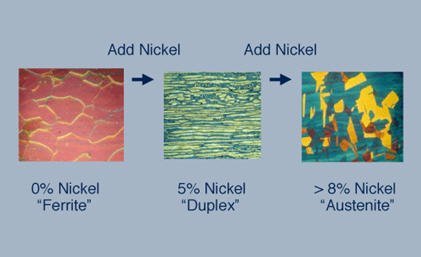
Grades Of Stainless Steel
Stainless steel has three grades. Austenitic, ferritic and duplex. Each grade has its own advantages. The austenitic grade is the most commonly used. It is non-magnetic, which makes its welding process easier. However, you need a proper filler to prevent it from cracking.
The ferritic grade is magnetic, which makes it more challenging to weld. You also need to preheat it before welding. The duplex offers properties of both austenitic and ferritic. However, you must carefully control the heat while welding it.
Disadvantages of stainless steel
Stainless steel can trap heat for longer durations. This increases the risk of expansion and contraction. When there is too much heat within the metal, it can cause warping and discolouration. You can even lose the corrosion resistance of your weld.
Common applications of stainless steel welding
Stainless steel is often used for welding projects involving food processing equipment, surgical instruments and medical devices. You can select this metal for brewing tanks, pipelines, decorative railings and even modern architecture.
Cast Iron Welding
Another material is cast iron, famous for its toughness. However, its toughness makes it brittle. Despite this, it is commonly used for welding engine blocks, heavy pipes and machine parts. The applications are numerous.
However, the welding process is a difficult task. The high carbon content of the cast iron makes it very susceptible to cracking. You can still achieve successful cast iron welds if you manage to control the heating and cooling well.
The steps for welding cast iron are simple. You need to pre-heat the metal to ensure minimal thermal stress before you begin welding. The cooling afterwards should be slow and steady as well. You can do this by burying the metal in sand or ashes.
Another crucial step is to choose the right filler material. You must select nickel rods for welding cast iron. They can absorb stress more efficiently, which helps reduce the likelihood of cracks. If nickel rods aren’t available, you can choose steel fillers. These aren’t as great as nickel, but they are a cheaper alternative.
If you are a beginner, you need to prepare well and stay cautious. Patience is very important throughout the welding process. If you mess up a single step, it can lead to immediate or delayed cracks.
Common applications of cast iron welding
Cast iron welding is often used for industrial piping systems. It is ideal for repairing engine blocks. You can use it for fixing machinery parts. It is a great option for restoring old architectural structures.
Aluminum Welding

Welder Welding Aluminium
Aluminium is a very lightweight metal. However, it is used for welding owing to its strength. Aluminium is used in many important industries like aerospace, transportation, and construction. Although commonly used, welding can be a challenging task. Owing to its high heat conductivity, there is always a risk of burn-through.
Another issue is the oxide layer that forms on its surface. The formation is a natural process. Therefore, when welding, clean the layer thoroughly. The layer has a higher melting point than the base metal. If not cleaned, it can interfere with welding, making it very difficult.
The good news is that aluminium works well with TIG welding. With this technique, you can have better heat control. The result is a cleaner finish. However, you can also opt for MIG welding, which is a faster process. This method is great when working on thicker sections.
For aluminium welding, shielding gas is a must. It can be either argon or helium. You have to use the gas to prevent an oxygen reaction. If you fail to do so, you can end up with weak welds.
Beginners often struggle with aluminium welding. The melting speed and oxide layer can easily frustrate you. However, if you master heat control and cleaning, you can achieve high-quality welds with aluminium welding.
Common applications of aluminium welding
Aluminium is widely used to weld aircraft frames and components. Car, motorcycle parts, boats and ships also benefit from aluminium welding. Simple everyday structures, such as windows and door frames, often use aluminium welding as well.
Copper Welding
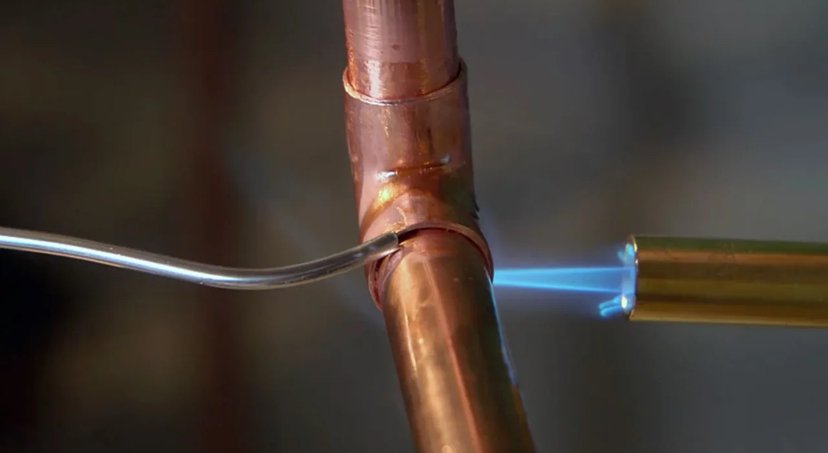
Copper Pipe Welding Using A Blowtorch And Filler Rod
Being an excellent conductor of heat and electricity, copper is widely used to weld metals. It is being used for electrical wiring, plumbing, and even refrigeration systems. However, the properties that make copper an amazing metal for welding also make the welding process difficult. Copper tends to absorb heat rapidly.
This means that you will have to use higher welding temperatures to weld copper. You will also have to pre-heat. This will help reduce the risk of poor weld pool formation and cracks. During the welding process, you will have to use shielding gas, preferably argon, to prevent oxidation of copper.
Copper welding also demands specific filler rods which match the base material. To add more strength to copper, consider using copper alloys for welding. Being a good conductor, copper tends to cool down very quickly. This property of copper is crucial to remember when welding.
So, when you are welding, you should have a steady control of the heat input. This will help you achieve strong, clean welds. Despite being tricky, copper welding is a necessary skill, valuable across many specialised industries.
Common applications of copper welding
Copper welding is commonly used in electrical engineering and wiring projects. Pumbling, water pipelines, heat exchangers and refrigeration systems also benefit from copper welding. You can also use copper weld for decorative and architectural projects.
Nickel, Titanium, and Magnesium Welding
You won’t always see nickel, titanium and magnesium being used in everyday projects. These aren’t commonly used like steel and aluminium are. However, they are valued across many specialised industries. Welding these metals can be challenging for you as they demand advanced welding techniques.
However, if you can grasp these advanced welding techniques, you will have numerous opportunities in modern, precision-driven industries. Let’s explore these metals one by one.
Nickel
If you are looking for a metal that is highly resistant to both corrosion and heat, nickel is the ideal choice. You can see it being used for projects in chemical plants, power generation, and marine environments.
However, to weld nickel, you need to ensure a very clean surface. Your control over the shielding gas should be steady. Another important consideration when welding nickel is to use filler rods specifically designed for nickel alloys.
Titanium
When you need a lightweight metal for your welding project that also offers strength, consider titanium. Titanium is a valuable metal used in industries like aerospace, medical implants, and high-performance equipment.
If you plan to weld titanium, ensure the environment is thoroughly cleaned.
You will have to be mindful of preventing oxygen contamination. For this, you can use argon shielding gas. If you fail to protect titanium from oxygen, the slightest exposure can weaken the weld.
Magnesium
The lightest metal among all three is magnesium. Being lightweight, it is of great importance for the automotive and aerospace industries. However, magnesium is very reactive with oxygen, making welding a challenging task.
This means that you will have to shield the metal properly using a shielding gas while welding. Furthermore, you need to ensure an appropriate heat control as well. If you are unable to shield properly or control heat input, the risk of contamination increases. This can result in weak welds which easily crack and distort.
Below is a table that shows metal welding materials and their common industrial applications.
| Metal | Key Industries | Common Uses |
| Carbon Steel | Construction, pipelines, manufacturing, shipbuilding | Building frameworks, bridges, heavy machinery, automotive parts |
| Stainless Steel | Medical, food processing, architecture, breweries | Surgical tools, tanks, pipelines, decorative railings |
| Cast Iron | Automotive, heavy machinery, industrial piping | Engine blocks, machine parts, old structure repairs |
| Aluminum | Aerospace, transport, construction, marine | Aircraft frames, car parts, boats, window/door frames |
| Copper | Electrical, plumbing, refrigeration | Wiring, pipelines, heat exchangers, decorative pieces |
| Nickel | Chemical plants, marine, power generation | Corrosion-resistant parts, turbines, industrial equipment |
| Titanium | Aerospace, medical, high-performance equipment | Implants, aircraft parts, sports gear |
| Magnesium | Automotive, aerospace, electronics | Lightweight car parts, aircraft components, laptops/phones |
Choosing the Right Welding Process
You must be familiar with various types of metal welding processes. However, choosing the most suitable technique for your project is what matters the most.
So, how can you make a wise decision? It all depends on your base metal, its thickness, and the environment. Ensure you select the most suitable method; otherwise, you may end up with weak joints or wasted material.
| Welding Process | Best For | Key Advantage |
| Stick Welding (SMAW) | Carbon steel, cast iron | Simple, works well outdoors, versatile |
| MIG Welding (GMAW) | Aluminum, stainless steel | Fast, easy to learn, high productivity |
| TIG Welding (GTAW) | Stainless steel, aluminum, titanium | Precise, clean, high-quality welds |
| Flux-Cored Welding (FCAW) | Heavy-duty and structural work | High deposition rate, strong welds, good for thick metals |
Common Mistakes When Learning How to Weld Metal
When you begin learning how to weld metal, you will likely make some common mistakes. Making mistakes is a part of the learning process. These often occur when you fail to prepare properly or use the wrong technique.
If you are aware of common mistakes, you can prevent them from occurring. This will help you improve weld quality while also saving you time and money.
Below is a table that shows the most common mistakes:
| Mistake | Result | Fix |
| Wrong settings | Weak or porous welds | Match amperage/voltage to metal thickness |
| Dirty metal surface | Contaminated, weak welds | Clean with grinder/brush before welding |
| Wrong filler/gas | Cracks, poor strength | Use filler and shielding gas for the base metal |
| Skipping preheat (cast iron) | Cracks and brittleness | Preheat brittle metals before welding |
| Overheating thin metals | Burn-through, warping | Lower heat, move faster, use backing |
| Rushing cooling | Cracks in weld | Let welds cool slowly |
| Bad welding angle | Spatter, lack of fusion | Keep 10–15° travel angle |
| Poor travel speed | Weak or uneven welds | Maintain steady movement |
| Ignoring safety | Burns, fumes, eye damage | Wear PPE and ensure ventilation |
| Lack of practice | Low weld quality | Practice on scrap regularly |
Conclusion
Welding metal may seem like a straightforward process that involves melting and joining metal pieces together. However, it demands expertise and attention to detail. There is a diverse variety ranging from carbon steel to titanium. Each metal has its own specific advantages and disadvantages.
You must have a strong understanding of how different metals react to heat. By being aware of the unique properties of metals, you can select the most appropriate one for your project. This will also help in choosing the correct welding technique.
You should also practise the welding technique suitable for your selected metal to gain skills. These skills will bring opportunities in projects across various industries like construction, manufacturing, automotive, aerospace, and beyond.
To achieve strong, clean and long-lasting welds, you must know how to weld metal correctly. Whether you’re a beginner or an expert welder, always prepare well and have patience throughout the welding process. If you do this, paired with your knowledge of materials, you will surely unlock success.


 EN
 ES
 RU
 JA
 FR
 PT