

When fabricating metal, choosing a suitable welding technique is vital in order to achieve a successful result. Two types of welding are Tack Welding and Spot Welding. Although these terms appear to describe the same process, they have rather different applications.
Tack welding is used to hold metal components in place for alignment before the main weld is applied, while spot welding is used to join metal sheets permanently together.
Recognizing the difference between tack welding and spot welding can help you eliminate wasted resources, reworks, and weak joints. Let’s uncover when to use each method to help make your welding work easier and faster.
What Is Tack Welding
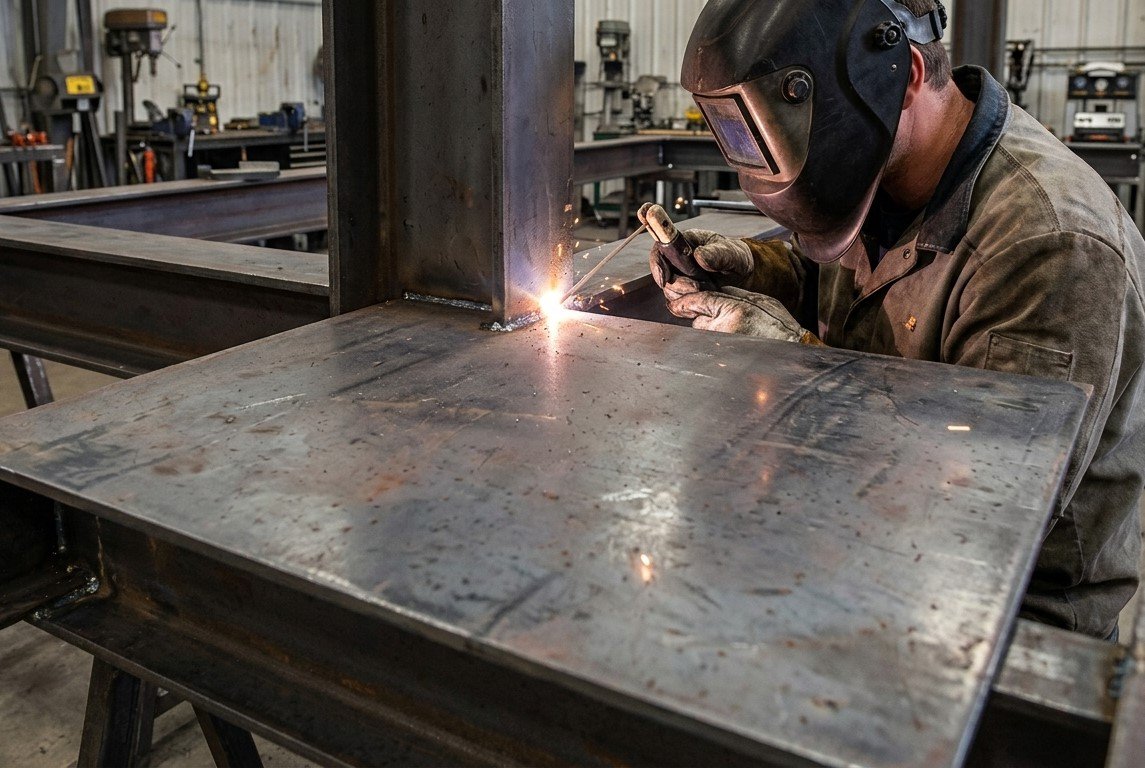
Tack welding process involves temporarily holding metal components with small spot welds called tacks before completing a proper weld. Tacks help maintain alignment. You can imagine tack welding as pins that hold the fabric before sewing. These pins ensure that the fabric is in place before permanent stitches are made.
Tack welding is especially important when you have to maintain proper alignment of components with tight tolerances. For instance, you are welding a metal gate. For this, you will first place tack welds to ensure that your frame is perfectly square. Then, you can go ahead with your complete welding.
However, you must remember that tack welds are usually small in size. This makes them unsuitable to bear heavy loads permanently. You need to be mindful of their temporary nature. The purpose of a good tack weld is to keep the metal components in the correct alignment throughout the fabrication process by reducing movement and distortion.
What Is Spot Welding
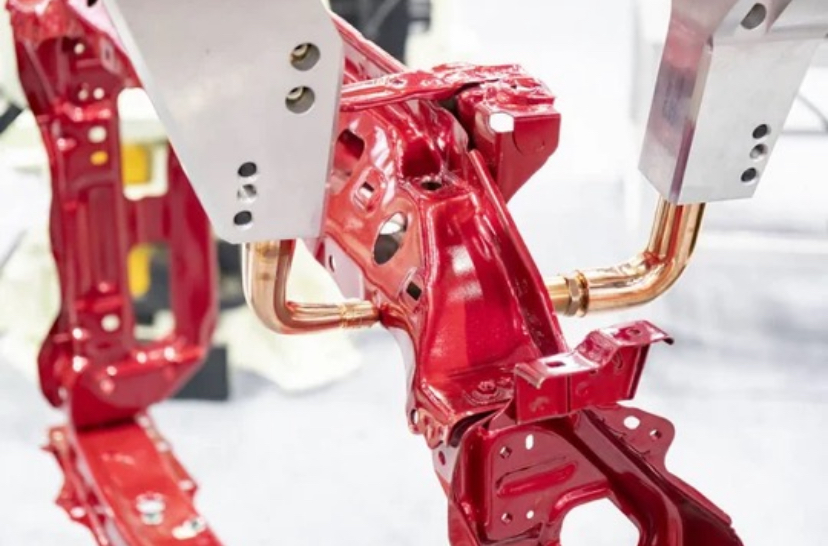
Spot welding process involves joining two or more metal sheets using heat and pressure. It is a permanent, resistant welding process that uses the flow of electricity to create heat. This heat passes through the metal pieces, causing them to melt and join together. Unlike tack welding, spot welding makes a finished joint which becomes a part of the final assembly.
As a manufacturer, you can opt for spot welding because it is a fast and reliable welding technique. Car manufacturers use spot welding to assemble car body panels. This quick technique not only helps you create strong joints but is also suitable for working with thin sheets of metal.
Unlike other welding techniques, spot welding does not join metal sheets using filler material. The metal sheets are joined using controlled electrical resistance and pressure applied by welding electrodes. You can easily find spot welding being used in the production of electronics, metal sheets, appliances, and automotives.
Tack Welding vs Spot Welding: Key Differences
Even though spot and tack are two methods that join pieces of metal together, they do this in very different ways with very different applications. The most important distinction is rather simple: Tack welding only temporarily holds parts to be joined. Spot welding, on the other hand, works to create a permanent joint.
If you are able to understand these differences, you can select the most appropriate technique to complete your task.
1. Purpose of Welding
Tack welding is primarily done to position pieces of metal. After all the pieces to be joined have been arranged, it is important to hold them in position to prevent them from shifting during handling or final welding.
Let’s suppose you are welding a large steel structure. You place different sections of metal together and carry out tack welding. When you achieve the perfect alignment, you can do the final welds.
On the other hand, having a permanent weld between metal sheets is the main purpose of spot welding. The actual spot weld is a permanent part of the entire structure after completion. A good example here is a car door panel which is permanently joined through spot welding. The weld remains strong for the entire life of the vehicle.
2. Temporary vs Permanent Connection
The most significant distinction between the two welding methods is the temporary and permanent nature of the welds.
Tack welding is a temporary connection. These welds are used only to hold the parts in place and can be easily removed if adjustments are required. Tack welds are used to keep the parts aligned while final adjustments are made.
Spot welding is a permanent connection. The method is used as a final joining weld that is designed to withstand loads and stress. However, they are done in such a way that they cannot be removed without damaging the joined metal pieces.
3. Welding Process
Tack welds can be made using different welding processes like MIG, TIG, and stick welding. The main difference among these welding processes is that you only create a few small weld points instead of the usual continuous weld.
On the other hand, spot welding utilises electrodes that apply pressure and pass an electric current through the workpieces. The surfaces of the metallic workpieces are electrically resistant to the flow of electricity. This creates enough heat to form a fused weld spot.
4. Material and Thickness
Tack welding is flexible enough to join several different materials of varying thicknesses because it’s predominantly used for positioning pieces. However, it is better to use spot welding if you are working with thin metal sheets made from materials like low-carbon steel. Spot welding is common in industries that require joining many metal sheets together in repeated fast intervals.
5. Strength
A tack weld lacks strength; hence, it isn’t considered a structural weld. It is small and temporary. Spot welding is the opposite. A spot weld is made in a way that it can provide permanent strength to the structure. When you add multiple spot welds to a structure, you create a permanent strong connection. This can easily handle the everyday rigorous vibrations and stresses.
6. Equipment Requirements
The equipment used in both of the processes is also another difference. If you are carrying out tack welding, there is no need for a special machine. Tack welds can be done using standard welding equipment such as TIG, MIG, or stick welders. Let’s suppose you are fabricating a metal staircase; you can use a MIG welder to put small tack welds in place. Later, you can apply the final welds to the joints.
In contrast, spot welding needs a special dedicated resistance welding machine. This machine has two electrodes that, while pressing the workpieces, send an electrical current through them. Since the process is done through a combination of pressure, electrical current, and timing, inconsistent welds can easily result from improper machine settings.
7. Speed and Production Use
You might find tack welding to be a slow process as it is only a step in a larger welding project. As a welder, you will take time to measure, align, and carry out a series of tack welds prior to moving on to the final weld.
In contrast, spot welding is a faster alternative. Hundreds of identical spot welds can be produced in a very short time by machines. This is the reason why factories have many spot welding applications. You can easily witness automotive factories using automated spot welding robots for assembling the bodies of vehicles.
8. Appearance of the Weld
You might find tack welds small and uneven. This is because their only goal is to hold components together. On the other hand, the consistent appearance of spot welds is because of the machines managing all the welding parameters like pressure and current.
Hence, for industries where appearance is important, like automotive manufacturing, spot welding is used in order to achieve the necessary level of quality and finish.
| Feature | Tack Welding | Spot Welding |
|---|---|---|
| Main purpose | Holds metal pieces in position before final welding | Creates a permanent welded joint |
| Type of connection | Temporary | Permanent |
| Welding method | Can use MIG, TIG, stick, or other welding processes | Uses resistance welding with electrodes |
| Materials used | Works with various metals and thicknesses | Mostly used for thin metal sheets |
| Filler material | May use filler depending on welding method | Usually does not require filler material |
| Equipment needed | Standard welding equipment | Spot welding machine with electrodes |
| Weld size | Small points or short welds | Small circular weld nuggets |
| Common applications | Fabrication, construction, repair work | Automotive, appliances, sheet metal production |
| Strength | Limited and mainly for holding parts | Strong enough for final assemblies |
| Removal | Can be cut or removed easily | Difficult to remove without damaging metal |
| Production speed | Slower because it is part of a larger welding process | Very fast for mass production |
| Skill requirement | Requires careful positioning and alignment | Requires proper machine settings and control |
When to Use Tack Welding
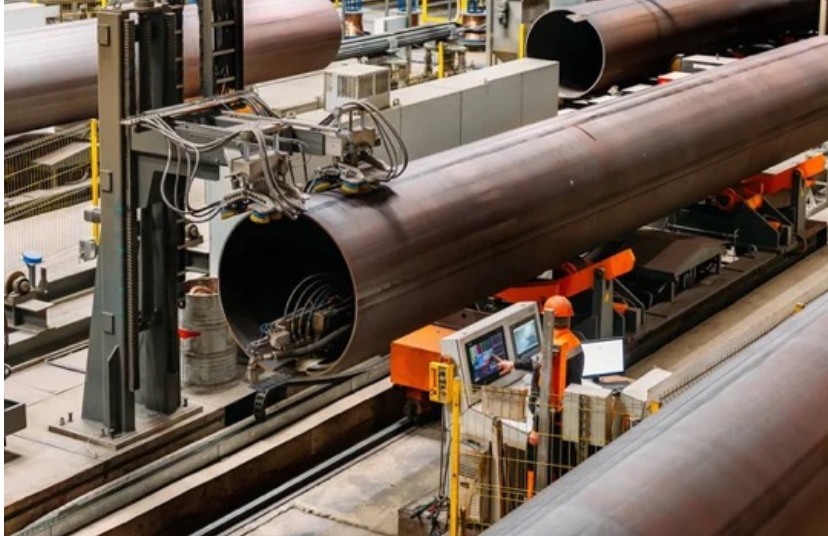
Tack welding comes in handy when you really want to ensure accurate positioning before the weld is completed. By having good control over the adjustment of welding pieces, you can avoid mistakes during the fabrication process. Let’s have a look at some situations that are best suited for tack welding.
1. Before Completing Large Welds
Large assemblies take a lot of time to weld. This makes them susceptible to warping and shifting when subjected to heat. Tack welding temporarily keeps everything in place.
Corners of steel frames can be tack welded before the frame is fully welded. This helps you check whether the dimensions of the frame are accurate or not before they are permanently joined. You can face alignment issues if your pieces shift. To resolve this, you can use tack welding.
2. To Maintain Proper Alignment
You must take extra precautions to ensure precision when welding. If your pieces move even slightly, the final result gets messed up. Hence, you can benefit from tack welds, which keep your metal pieces in the exact position.
For instance, you want to repair a broken metallic bracket. Before finishing the final repair, you can use tack welds to put all the pieces together. This helps you see if everything is in place before you make the joints permanent.
3. During Metal Fabrication Projects
Metal fabricators often use tack welding for the construction of custom metal products. These products can include:
- ★Steel frames
- ★Gates
- ★Railings
- ★Parts for machinery
- ★Metal furniture
When you are welding custom metal products, you need to design and assemble the metal pieces using tack welds before final welding. This leaves room for adjustments to be made if needed without damaging the metal. So, you don’t have to cut the entire completed weld.
4. To Reduce Welding Distortion
Distortion often occurs when you subject your metal pieces to heat. This means that your metal pieces can bend, shrink, and even change their shape. Hence, tack welds are strategically placed to minimize distortion.
To minimise movement of metal pieces under heat, you can strategically place tack welds. This will keep your structure the way you had designed it. For instance, when you weld a large metal sheet, you would have to place evenly spaced tack welds. If you fail to do so, you won’t be able to prevent the edges from pulling together.
5. When Working With Complex Shapes
Some welding projects require more of a perfect fit between multiple pieces. Tack welding is helpful as it allows you to lay out the positions of all the parts before final welding is completed.
An example of a project where this would be used is a custom exhaust system. For each section of the system, you must first fit and tack weld the pipes together. When you have tested the position, you can continue with the final welds.
6. Before Welding Thin Materials
When welding thin metals, you can easily cause them to warp and burn through. If you use small tack welds, you can hold thin materials in place while controlled welding is done.
Let’s look at an example of a thin box made from sheet metal. If you weld the corners, you can cause the box walls to pull apart. However, tack welds can hold the panels while you complete welding the corners.
7. During Repair Work
Damaged components can result in less than perfect alignment during repairs. This can result in the need to adjust components multiple times. Hence, tack welding helps address such alignment issues by allowing you to make small corrections before permanently fixing all the parts.
For instance, if you are repairing heavy equipment, you can tack weld the replacement plates during the repair. This can help ensure alignment of the plates. The plates can be fully welded after alignment is good.
8. For Temporary Assembly
If you are testing a new design, you would want to hold each component together temporarily. This helps you test the design during the prototyping phase of a project. Always remember that the component alignments may not be perfect.
Hence, you must first use tack welds to hold components in place without the need to create a permanent weld. This technique is really helpful for prototypes, custom projects, and experimental welding.
When to Use Spot Welding
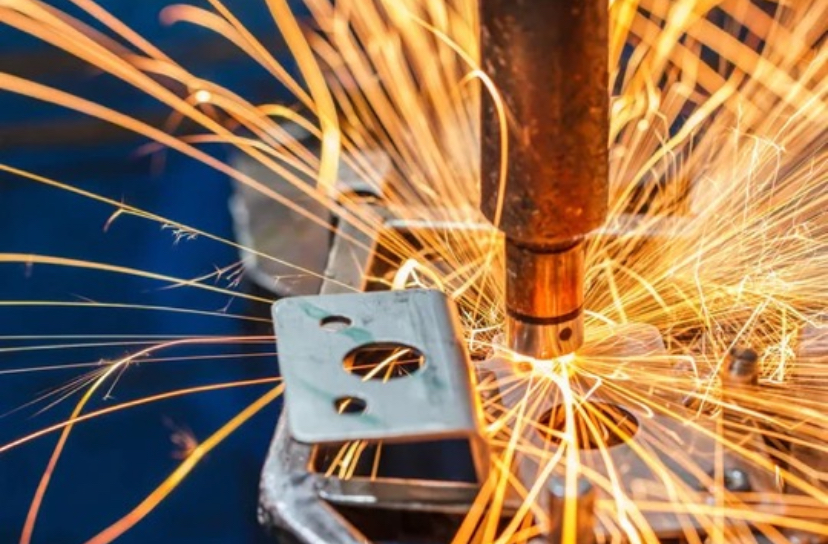
Fast, permanent, and consistent joints between metal sheets are best accomplished with spot welding. Industries that need quick and repeatable results on a large scale rely heavily on spot welding. Below are some examples where spot welding is most useful.
1. Automotive Manufacturing
One of the industries that relies most on spot welding is the automotive industry. There are a lot of thin metal panels that make up a car’s body. These panels require a strong connection to each other. Spot welding helps manufacturers connect these panels in a short period of time. Hence, vehicle frames, roofs, and doors can be spot welded hundreds of times in a single vehicle.
2. Joining Thin Metal Sheets
Spot welding is best for connecting overlapping sheets of metal. It is an ideal process because you can create a strong connection without adding any additional material.
Some of the common uses are:
- ★Panels on cars
- ★Metal cabinets
- ★Steel containers
- ★Appliances for households
3. Mass Production
If you have to make an identical product thousands of times, you can save time with spot welding. Using machines, you can make the same welds over and over again with consistent quality. This is the reason why spot welding is used frequently in appliance manufacturing like washing machines, refrigerators, as well as metal housings.
4. Projects Requiring Clean Finishes
Spot welding joins materials in a way that the weld is small and neat. You cannot see large amounts of weld material. This is advantageous for applications where aesthetics are important. A good example of where spot welding is beneficial is in the fabrication of metal furniture.It allows you to create strong joints while leaving the component surfaces clean.
5. Automated Manufacturing Systems
Spot welding is also a great choice for automated systems and robots. You can easily program welding steps to be used by factories to carry out precise welds quickly. This increases workplace efficiency and output while minimising inaccuracies in the welds.
6. Electrical and Electronic Components
There are many electrical products that demand the joining of thin metal parts. Being delicate, you must ensure that you don’t damage the sensitive components. Hence, spot welding is used for applications such as manufacturing battery packs, as well as other metal assemblies. You will find battery manufacturers using controlled spot welding to safely weld thin metal strips.
Tack Welding vs Spot Welding: Pros and Cons
Although both methods have their advantages and disadvantages, some applications are better suited for one over the other. Knowing about the advantages and disadvantages of both methods helps you choose the best welding solution.
Advantages of Tack Welding
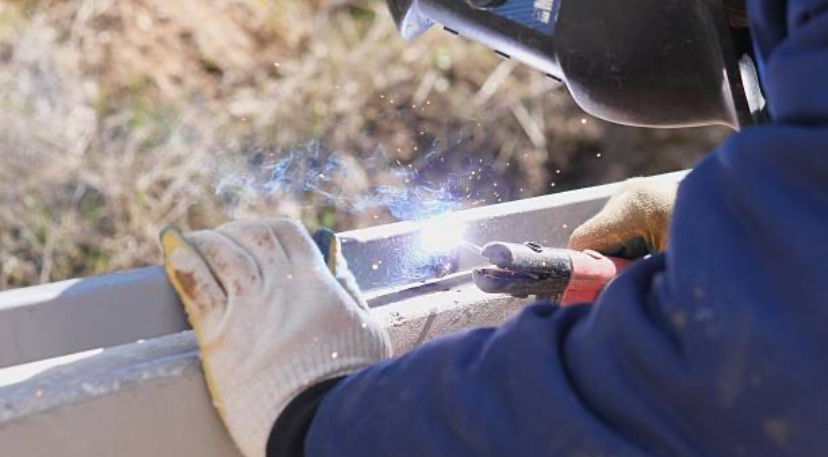
1. Improves Accuracy and Alignment
At the beginning stages of a welding project, perfect alignment is difficult. However, tack welding helps you keep multiple pieces of metal at a certain position. This allows easy adjustments and final measurements to be made before the welds are finished.
Let’s take the example of a steel gate project. You can use tack welds to fix the corners first. Then measure the entire frame. If any adjustments are required, you can make them at this stage. When everything is perfect, you can make final welds. This will help you save time because you don’t have to cut and rebuild the incorrectly placed parts.
2. Reduces Welding Errors
Welding mistakes can drain time and resources. Poor alignment leads to material wastage and additional rework. Tack welding allows you to position components and align them before making permanent joints. Especially for more intricate projects, this step brings added assurance to the quality of the final weld.
3. Prevents Metal Movement
Welding creates heat, and heat causes metals to shift due to expansion and contraction. This is the worst thing for the integrity of your project, as the shape can get altered. Temporary tack welds support the metal and help control shifting. Tack welds are especially useful for long steel beams to hold everything in place for the permanent welds to be applied.
4. Easy to Modify or Adjust
Since tack welds are temporary, they can be removed to readjust and change whenever needed. This is particularly useful if you are carrying out custom fabrication. If components do not fit and align how you want them, the tack welds can be broken to reposition them without ruining the project.
5. Works With Different Welding Methods
Tack welding is not limited to one type of welding technology. Tack welds can be performed using MIG, TIG, Stick welding, and even Flux-cored welding techniques. Hence, it can be utilized in multiple industries and applications.
6. Low Equipment Cost
As tack welding uses general welding techniques, you don’t have to spend money on expensive specialised machinery. Hence, small-scale welding workshops and individual welders can perform tack welding using the tools and equipment already available in their workshops.
Disadvantages of Tack Welding
Here are a few limitations of tack welding.
1. Not Designed as a Final Joint
The main drawback of tack welding is that it is not strong enough in most cases to be a permanent weld. Tack welds are only meant to hold things in place for a limited time. If permanent joints in an industrial heavy-duty structure are made using tack welding, they are likely to fail when put in service.
2. Requires Additional Welding Steps
Tack welding doesn’t stand alone in the welding process. You will have to make regular welds after tack welds are done. Hence, it is an extra step that needs to be carried out in your workflow. In large-scale production, this will end up costing a lot of time.
3. Poor Technique Can Cause Problems
Tack welding can appear to be a straightforward process. If your tack welds are weak or uneven, they can break during handling. Incorrect placements will also demand frequent adjustments to create proper alignment, which can otherwise create problems in the final structure. Hence, you can only achieve good results with proper spacing and technique.
4. Can Create Heat Distortion
Welding even small joints can create a lot of heat. With a lot of tack welds being placed in a small area, there will be a lot of stress. This can cause the metal to wrap, especially if it is thin. However, a good welder will know where and how to place tack welds properly.
| Pros | Cons |
|---|---|
| Improves alignment | Not a permanent joint |
| Reduces welding errors | Requires additional welding |
| Prevents metal movement | Poor technique can cause problems |
| Easy to modify | Can create heat distortion |
| Works with multiple welding methods | |
| Low equipment cost |
Advantages of Spot Welding
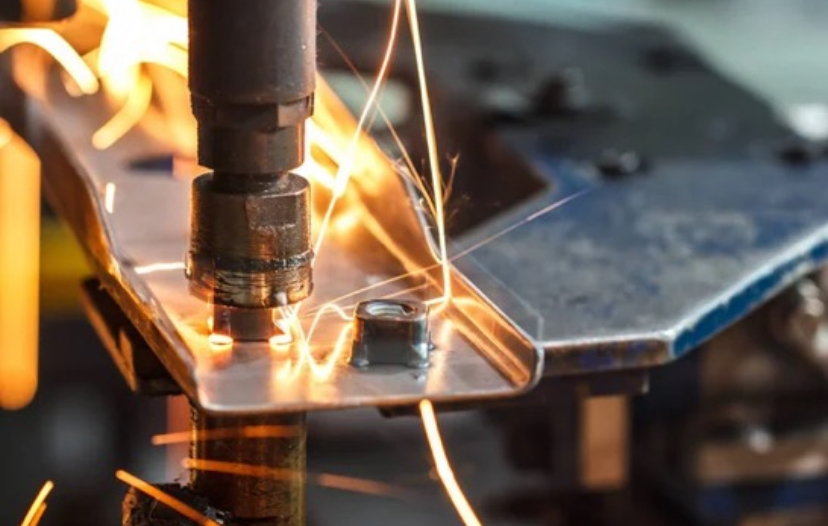
1. Very Fast Welding Process
The major advantage of spot welding is the speed at which a metal joint can be formed. A spot welding machine can form a strong joint in just a few seconds. For this reason, it is preferred by any industry that deals with mass production. One good example is the production of automotive vehicles, where panel assembly is done using spot welding rather than any other time-consuming process.
2. Creates Strong Permanent Joints
The connection of metal sheets with spot welding is strong and permanent. When a number of spot welds are made along a required line, the construction is strong and resistant to vibrations. The same reason makes spot welding a preferred method in the construction of vehicles and industrial equipment.
3. No Filler Material Required
In some welding methods, filler rods or wires are required to be introduced in the joint. This is not the case for spot welding. In spot welding, the surfaces of metal sheets are brought in close contact, and a weld is made by the application of heat. The heat is brought about by the passage of electric current and pressure. This results in a significant reduction in the cost of materials. It also makes the process of welding cleaner.
4. Suitable for Automation
Robotic systems allow easy automation of spot welding. Factories have started implementing robotic spot welders as they yield repeatable results and improve production times. An excellent example of spot welding is seen in modern car manufacturing as robotic arms are used to conduct thousands of spot welds accurately.
5. Produces Minimal Waste
Spot welding does not use any filler material. Therefore, it has far less waste compared to other welding methods. It’s an optimal process for large manufacturing operations.
6. Provides Consistent Results
By ensuring machine-controlled settings, every weld gets the same temperature, pressure, and time. This makes spot welding perfect when thousands of the same products are made.
Disadvantages of Spot Welding
Here are a few limitations of spot welding.
1. Limited to Certain Materials and Thicknesses
Spot welding is suitable for thin materials only. It is not effective on thick metals since it cannot produce the required heat throughout the entire mass of the metal. An example of a metal that cannot be welded using spot welding is steel construction beams. Other welding operations would be needed for such thicker metals.
2. Requires Specialized Equipment
Unlike tack welding that uses a simple, inexpensive setup, spot welding uses a complex setup that involves a dedicated machine. For small-scale operations, spot welding is less practical since the equipment used is expensive.
3. Limited Access to Joint Areas
Spot welding requires access on both sides of the workpiece since the electrodes need to be pressed against the metal. If one side is inaccessible, then a different welding method would be needed.
4. Difficult to Repair or Modify
Spot welding is permanent. So, you can’t make any changes. Removal of spot welds would involve damage to the rest of the workpiece. To remove spot welds, you can drill or cut, which will definitely cause the surrounding material to get damaged.
5. Requires Proper Machine Settings
Welds may not meet the required standards if the parameters are not maintained and controlled. Some of the parameters that should be maintained are the welding time, the condition of the electrodes, the welding current, and the pressure applied. If these parameters aren’t maintained, the joint will be incomplete or unreliable.
| Pros | Cons |
|---|---|
| Very fast welding process | Limited to thin materials |
| Strong permanent joints | Requires specialized equipment |
| No filler material required | Needs access to both sides |
| Suitable for automation | Difficult to repair or modify |
| Produces minimal waste | Requires precise machine settings |
Conclusion
Both tack welding and spot welding have unique benefits in metal fabrication, and understanding their differences will help you choose the right process for your project.
Tack welding is used as a temporary step to align and hold metal components in place before final welding. It helps prevent shifting, reduces heat distortion, and allows for adjustments during custom fabrication. However, it is not meant to provide structural strength on its own.
Spot welding is a fast, permanent resistance welding method designed to join thin metal sheets using heat and pressure. It requires no filler material, produces clean and consistent welds, and is ideal for high-volume manufacturing like automotive assembly and sheet metal production.
By matching the right welding technique to your project’s material, thickness, and production goals, you can improve weld quality, save time, and avoid costly mistakes.
Frequently Asked Questions (FAQs)
1. Can tack welds be left in place during the final weld?
A: Yes, in most cases, tack welds are melted and incorporated into the final weld bead during the main welding process. However, they must be clean, free of defects, and properly sized to avoid weakening the final joint.
2. Is spot welding stronger than tack welding?
A: Yes, spot welding is significantly stronger because it creates a permanent, fused joint designed to withstand structural load and stress. Tack welding is only meant for temporary alignment and holds little strength on its own.
3. Do you need filler metal for spot welding?
A: No, spot welding does not require filler metal. It joins two overlapping sheets of metal using electrical resistance heat and physical pressure applied by electrodes.
4. Can you tack weld with a spot welder?
A: While spot welds are sometimes used informally to temporarily hold thin sheet metal parts together, a spot welder is designed for permanent joints. For true tack welding on structural or varied materials, MIG, TIG, or Stick welders are standard.
5. What materials are best for spot welding?
A: Spot welding works best on thin sheet metals made from low-carbon steel, stainless steel, and nickel alloys. Materials like aluminum can also be spot welded, but they require higher electrical current and specialized electrode setups.
Recommend Reading
Types of Welding Process – SENLISWELD
Metal Welding – SENLISWELD
Welding Machine – SENLISWELD
Welding Joint – SENLISWELD


 EN
 ES
 RU
 JA
 FR
 PT