

We know you are familiar with the importance of inspection with all the time, money, and reputation that can be lost from even a single defect. However, one of the more troubling aspects of traditional inspection methods is that they are slow and inconsistent. You have to rely too much on human effort. That’s where the shift starts.
Currently, you are stepping into a new era where automated quality inspection is changing the dynamics of industries. The introduction of collaborative robots, or cobots, has eliminated the choice between speed and accuracy. Now you can have them both.
Let’s discover the impact of automated inspection systems with cobots on the metalworking industry. By understanding why these systems are critical to the future of manufacturing, you will be able to incorporate them.
The Pain Points of Manual Inspection Pave the Way for Cobot Inspection
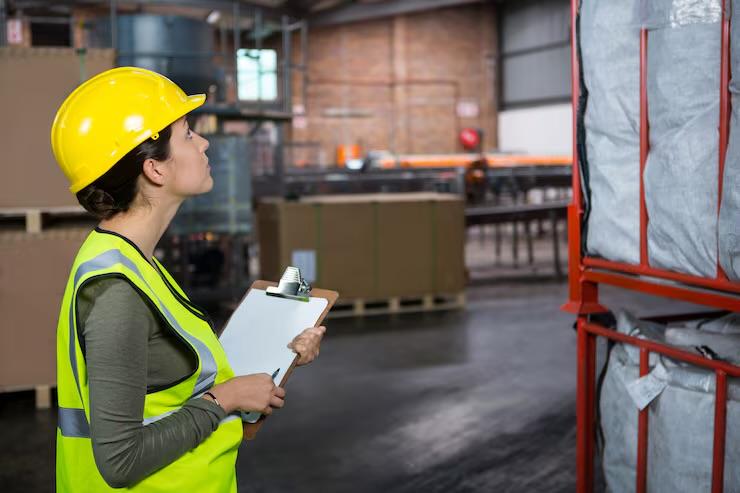
Before any changes are made, you must have a good knowledge of what you are moving away from. For decades, quality assurance has relied on the interpretation of standards by humans. However, this has a detrimental effect on productivity, quality, and costs. Let’s break down how quality assurance by humans wasn’t that good.
1. Errors and Inconsistency
When you have to rely on manual inspection to check if the product meets the standards, there is a high chance of human bias. Humans can suffer from fatigue, distractions, and even have different decision-making capabilities.
This can result in inconsistent outcomes, which can compromise your product quality and customer trust.
2. Slow Inspection Speed
In the world of rapid, flexible manufacturing, slow processes, like manual quality assurance, get in the way of progress. Inspection becomes the primary area of productivity stalling.
You end up with piles of finished products waiting for approval, compromising your operational efficiency.
3. Exposure to Safety Risks
Manually inspecting heavy metal components or conducting automated weld inspections can be hazardous. Sharp edges, extreme temperatures, and toxic fumes can cause harm.
The workforce can be strained physically, which can lead to long-term health issues and more downtime.
4. Limited Scalability
If you are carrying out manual inspections, you need to add more inspectors to scale the production. This leads to greater labor costs and longer training.
Maintaining the same quality across a larger team becomes even more difficult as your production grows.
What is Cobot Quality Inspection?
Collaborative robots (cobots) assist employees in the inspection processes of their businesses through quality inspection of their manufacturing products. You must be wondering how they differ from traditional industrial robots. Unlike robots, cobots work safely beside employees and combine human decision-making with precise robotics.
These are equipped with efficient sensors, AI technology, and sensitive cameras. By using these features, cobots can help you detect defects, measure inspection sizes, and provide assistance in ensuring consistent product quality. With the help of cobots, you can reduce human error, increase efficiency, and maintain inspection spot accuracy no matter how long the production cycles are.
Nowadays, cobot quality inspection is allowing industries to achieve the much-needed fast product inspection without compromising on reliability. As cobots have taken over the repetitive tasks, workers are free to focus on more responsible and demanding jobs, thereby increasing industrial productivity.
How Collaborative Robots Conduct Quality Inspection in the Metalworking Industry
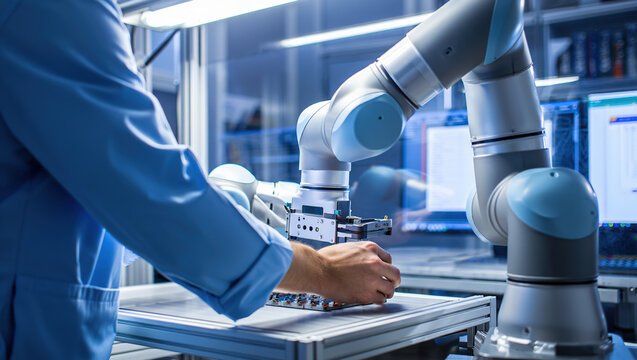
Visual Inspection with Machine Vision
Your cobots are integrated with cameras that can carry out error-proof quality inspections. These are able to identify surface cracking, dents, and deformities. This means you will have a consistent outcome of each inspection.
With advanced camera solutions like lighting and high-resolution imaging, you are able to identify defects that the human eye easily overlooks.
Dimensional Inspection
With cobots, you can also carry out dimensional inspection. The cobots can integrate sensors combined with 3D vision in order to measure parts accurately and consistently. You’ll be assured that your products will conform to the desired specifications.
The cobots will check each geometric feature, alignment, and even tolerances, thanks to the inspection solutions. When this is carried out in real-time, you won’t have to face losses that result from costly reworks or rejected batches. You will achieve a tighter control over each phase of your production.
Automated Weld Inspection
If you have any experience in welding, then you know just how important this step is. Cobots are capable of performing automated weld inspection. They can help you find errors in welds, like porosity, cracks, and incomplete fusion.
This is especially important with complex welding, where precision is needed for multiple welds. Hence, with the help of cobots, you will have a better and more uniform welding quality because of the lack of manual inspection.
Continuous Monitoring
Unlike humans, who are prone to error the more time they spend doing a certain task, cobots are not. With cobots performing quality inspections, 100% of your production can be quality inspected.
As cobots don’t get tired, they can function continuously without skipping even a single part of the production. This helps you lower the chances of your defective products reaching your customers.
Data Collection and Reporting
By investing in an automated inspection system, you gain the ability to collect data. This valuable data gives you insight into how your production is functioning. It illustrates defect trends, process inefficiencies, and production productivity.
Cobots will also present issues that you may not have even realized were problems. This will help you make better decisions so that you are able to optimize your workflow and improve your product quality over time.
Why Choose a Cobot?

It’s easy to understand how cobots transform the metalworking industry. However, you might question whether to invest in cobots or stick with traditional methods. The answer comes down to performance, consistency, and long-term growth for your operations.
- ✔Improved Accuracy: Cobots remove the chances of human error and yield stable inspection outcomes. You don’t carry the heaviness of worrying about the natural fluctuations of inspection. Cobots work tirelessly and uniformly around the inspection line according to the programmed standards. Thus, aiding you to provide the same quality.
- ✔Flexibility: The best feature of cobots is that they are highly adaptable. It doesn’t matter if you are working on small structures or large heavy components. You can easily set up the program to meet the requirements of your task. Hence, cobots give you the ability to evolve according to your production needs without any complex setup or complicated reprogramming.
- ✔Increased Efficiency: If you are able to ensure that the inspection is carried out at a faster pace, you can meet the high production demands. This won’t have any adverse effect on your product quality. All you have to do is make cobots work continuously by integrating them into your production line. You won’t have to deal with delays and inspection interruptions. Hence, you will be able to deliver your products faster while ensuring precision.
- ✔Enhanced Safety: You can now witness cobots integrating seamlessly to take charge of the previously dangerous inspection line. This helps ensure the overall safety of the workspace. With the help of cobots, your workers won’t be exposed to heavy components, sharp edges, or even hazards like heat. This not only safeguards your workers but also saves you the risk of downtime due to injuries.
- ✔Cost Savings: There is surely an initial investment that you have to make. However, this investment will grant you benefits later on when you won’t have to worry about heavy labour expenses. Furthermore, you will be saving money on reworks as well. When your production line is able to recognise defects early on, you can save yourself from rework and material loss. With time, the enhanced productivity and minimal operational expenses will give you the desired return on investment.
| Benefit | Why Choose a Cobot? |
|---|---|
| Improved Accuracy | Reduces human error and ensures consistent inspection results |
| Flexibility | Easily adapts to different tasks and production needs |
| Increased Efficiency | Speeds up inspection and supports continuous production |
| Enhanced Safety | Minimizes worker exposure to hazardous tasks |
| Cost Savings | Lowers labor costs and reduces rework expenses |
System Components of a Cobot
To understand how this technology applies to you, you should know the details of a cobot system. There are several components to a cobot quality system. Delay-free, accurate inspection depends on each of them.

1. Robotic Arm: The robotic arm is the component that performs movements and physically interacts with your workpiece. You can expect a robotic arm to be exact in positioning and to do things over and over again. With the help of a robotic arm, you can carry out consistent inspection angles and coverage. Hence, you are able to improve the accuracy of your inspection process.
2. Vision System: Through the cobot’s cameras and sensors, it can do a machine vision inspection. Owing to the high-resolution imaging and extraordinary detection capabilities, a cobot can analyse defects that you can easily miss. The cobot can help to identify surface irregularities and dimensional issues, ensuring consistent product quality.
3. Control Software: Think of this as the cobot’s brain. You can create a program for the cobot to manage it according to your needs. It allows you to change the values in the program to switch things around. To operate this software, you don’t need any advanced coding skills. The system is very user-friendly. You can set the inspection parameters, change the functions, and keep an eye on the performance. Hence, you fully control how the cobot carries out its operations.
4. End Effectors: End effectors are tools that can be attached to your cobot. Depending on your application, end effectors can be used as either grippers or inspection probes. These can make your system flexible and efficient through customisation based on your inspection requirements.
5. Safety Features: Cobots for quality control are designed with many safety features, such as sensors, which have the ability to perceive the presence of people. This helps cobots collaborate with humans safely. Therefore, you can confidently work with cobots without any risk. This helps you sustain high productivity levels in the workplace.
How to Select the Right Collaborative Robot for Quality Inspection
Selecting the appropriate collaborative robot (cobot) is important. If you make an appropriate decision, you can obtain maximum efficiency, precision, and lifetime benefit from your investment.
Load Capacity
It is essential to obtain a cobot that is able to support the weight of your components and your inspection instruments. Always keep in mind both your current and future needs. A cobot with a slightly larger capacity is ideal. This type of cobot gives you the optimum flexibility by preventing performance limitations as your production grows.
Reach and Flexibility
You would want your cobot to move smoothly across complex geometries without changing the position of its parts. Hence, you must consider the dimensions of your workpieces. This is important so that you can ensure the cobot is able to reach all the areas. Cobots larger reach and flexibility are associated with better coverage and reduced disruption in your operations.
Vision Capabilities
For successful automated quality inspection, the vision system must be able to fulfill your inspection accuracy and resolution goals. Together with a quality camera and sensor, the cobot will be able to reliably expose quality issues. Hence, it can stay consistent in inspection results across all products.
Ease of Programming
Always look for systems that have a simple configuration and modification. This is more important when your production is variable. A simple cobot has a user-friendly interface that doesn’t require a lot of training or complex programming. It can help you make and update your inspection tasks quickly, which reduces the need for lengthy and expensive staff training.

Integration with Existing Systems
Your metal inspection system should connect to your current systems without any trouble. If your cobot smoothly integrates with production lines, software, and data systems, you don’t face any disruptions. Hence, you are able to achieve maximum returns on your automation investment.
| Factor | What to Consider |
|---|---|
| Load Capacity | Choose a cobot that handles current and future weight needs |
| Reach & Flexibility | Ensure it can reach all parts easily |
| Vision Capabilities | Use good cameras and sensors for accurate inspection |
| Ease of Programming | Pick a system that is easy to set up and use |
| Integration | Ensure it works well with existing systems |
Future Trends in Cobot Inspection

The way inspections are being carried out is changing rapidly. To keep up with this transformation, your inspection system’s technology is expected to become smarter, faster, and more connected.
● AI-Powered Inspection
With the help of artificial intelligence, the vision of inspection systems is getting smarter. The machine is able to learn as more data is given to it. Hence, you can see an improvement over time. With the help of these smart systems, you will be able to detect defects with fewer false positives and fewer missed errors. Ultimately, you will be enjoying a highly accurate inspection system.
● Increased Automation
In the future, fully automated inspection systems will become the norm for industries. The standard would be even less manual handling. You can expect almost zero human intervention from production to quality control. To create highly efficient and reliable operations, workflows will become fully automated.
● Remote Monitoring
In the future, you can expect the inspection process to be monitored from any location due to the accessible nature of inspection systems. You will no longer have to be on site to make the system respond to the inspection triggers. This will give you the ability to take control with the help of real-time dashboards and alerts in order to make instant decisions without being physically present. Better control and tracking will translate into improved efficiency.
● Advanced Sensors
As technology is advancing, you will be seeing new sensors with greater precision and power. They will help you detect the minor defects that often go unnoticed. There will be 3D scanning ability as well as thermal imaging. You can use these to have a better insight into the quality of your product before you send it out.
● Wider Adoption
In the future, you will witness how advanced technology becomes a norm across many industries. This will impact its cost. With an increased demand, more cobots for quality control will be produced. Hence, the cost of cobots will decrease. This will make it easier for more manufacturing industries to integrate them. So, if you want to stay competitive, you must evolve with the new technology.
Conclusion
ou are at an important crossroads in the metalworks industry. The shift from manual inspection to automated inspection, digitalized by cobots, is no longer about meeting a trend. It has now become a strategic implementation. By investing in cobot quality inspection systems, you can really change your industry’s operational dynamics. No workforce can match your cobot system’s speed, accuracy, and reliability.
To stay competitive in the current demanding market, you must consider integrating automated weld inspection systems. It is a good investment that will help you create a smarter workflow, which is safer and more efficient. The efficiency of the cobot quality inspection will help eliminate human error and preserve the high quality of products.
The future of manufacturing is for those at the forefront of innovation. The automated cobot inspection system is the best investment you can make right now. This is your chance to scale operations, maintain quality, and optimize labor for the highest efficiency possible.
Frequently Asked Questions
Q: What is automated quality inspection?
A: Automated quality inspection evaluates products using technology, such as cameras, sensors, and robots. It involves little or no human involvement. It helps you inspect faster, cheaper, and more accurately than traditional inspection methods.
Q: How does machine vision inspection work?
A: Machine vision inspection uses cameras and software to capture and analyze images. It helps you detect component defects, measure size, and weight. Furthermore, it helps you stay in compliance with quality control regulations, with no delay.
Q: What industries benefit from cobot quality inspection?
A: You can incorporate cobots to carry out quality inspections in various regions, including construction, metalworking, automotive, and aerospace industries. In any industry that demands precision and consistency, a cobot inspection system is there to help.
Q: Is an automated inspection system expensive?
A: With a high initial investment, cobot quality inspection systems create savings through reduced costs later on. It lowers labour costs and rework expenses while increasing production. Hence, it is a long-term cost-saving solution.
Q: Can cobots perform automated weld inspection?
A: Yes, automated weld inspection is a highly effective use of cobots. With the help of cobots, you can identify cracks, porosity, and misalignment with higher certainty, as opposed to standard manual inspections.


 EN
 ES
 RU
 JA
 FR
 PT